HOA & Zoning Compliance in San Antonio, TX
HOA and zoning compliance in San Antonio means confirming your planned ADU meets three layers of rules before you spend a dollar on construction: city zoning codes, any historic or neighborhood conservation district overlays, and your homeowners association’s deed restrictions. A compliance review typically costs $800 to $2,500 as a standalone service, but when bundled into our full ADU Design & Permitting package it’s absorbed into the fixed written price we give you before any work starts. Call us at (430) 258-2928 if you’ve already got a letter from your HOA or you’re not sure where to start.
Most San Antonio homeowners don’t realize their HOA can stop a project the city has already approved. The city issues permits based on zoning. An HOA enforces private deed restrictions that can be stricter than city code, and neither agency checks with the other. That’s the gap we close. As a home service working exclusively on ADUs and additions, we’ve walked enough San Antonio projects through this to know which questions trigger a denial and which ones nobody actually checks.
Benson ADU San Antonio handles the full compliance arc under one roof: zoning verification, HOA document review, submittal package preparation, and the follow-up correspondence that keeps the file moving. Our parent service page on ADU Design & Permitting in San Antonio covers the broader permitting path. This page focuses on the piece most builders treat as an afterthought.
What HOA & Zoning Compliance Actually Means in San Antonio
In San Antonio, an accessory dwelling unit is generally allowed by right on most single-family residential lots zoned R-4 and above, subject to size limits, setback requirements, and parking rules. The city’s Unified Development Code caps detached ADUs at 800 square feet or 50% of the main dwelling’s floor area, whichever is smaller. Setback, for anyone not fluent in building code, is the minimum distance between a structure and the property line. San Antonio’s standard residential setback is 5 feet from the side, but some inner-city neighborhoods operate under older platting rules that allow 3 feet or less.
Here’s what surprises most homeowners: your HOA can say no even when the city says yes. A 2023 survey of San Antonio’s largest HOAs found that nearly 70% have some restriction referencing accessory structures, and about a third specifically prohibit detached rental units. That’s not a reason to abandon the project. It’s a reason to know what you’re actually up against before you pay for architectural plans.
Benson ADU San Antonio reviews HOA CCRs (covenants, conditions, and restrictions), identifies the specific clauses that apply to ADUs, and drafts the variance or exception request your HOA’s architectural review committee actually wants to see. Most committees don’t reject ADUs because they’re anti-housing. They reject them because the submittal is incomplete. A site plan with a missing notch on a setback line gets bounced, and the homeowner waits 30 days for the next meeting. We’ve fixed enough of those to know how to avoid them.
If you’re building with a prefab brand we carry, like Boxabl or Plant Prefab, the HOA conversation shifts. Committee members often picture a shipping container or a shed when they hear “prefab.” When we walk them through the actual elevation drawings, the James Hardie cladding options, and the finished product specs, the objection usually drops. Prefab does not mean temporary. We make that clear in the submittal package with brand documentation the committee can verify online.
When You Need HOA & Zoning Compliance
If any of the following describe your situation in San Antonio, you need a compliance review before you sign a construction contract:
- Your HOA has sent you a violation notice, or your neighbor has filed a formal complaint about a shed, carport, or half-finished addition. Existing violations complicate new ADU applications. We resolve the open file first.
- You’re in a gated community or a deed-restricted subdivision built after 1990. These HOAs typically have the most aggressive architectural review standards, and they enforce them.
- Your lot is in a historic district or a Neighborhood Conservation District. San Antonio has 30-plus NCDs, including Beacon Hill, Dignowity Hill, and Lavaca. Each has its own design review board with its own submittal requirements, and they review ADUs under a stricter aesthetic standard than city code requires.
- You’re planning a JADU, a junior ADU carved out of existing square footage inside your home. San Antonio’s code treats JADUs differently from detached units, and some HOAs don’t recognize the distinction at all. We’ll tell you which standard applies before you cut a single interior wall.
- Your property sits in a floodplain or within a drainage easement. Zoning compliance includes verifying that your ADU footprint doesn’t encroach on a floodway or a City of San Antonio drainage easement. The city checks this during permitting, but discovering it at plan review adds six to eight weeks. We check it in week one.
- You plan to rent the ADU on Airbnb or as a long-term lease. San Antonio regulates short-term rentals separately from standard rental units, and many HOAs prohibit STR activity in accessory structures even when they allow the ADU itself. If rental income is the goal, this needs to be answered before you build.
If you’re not sure whether any of this applies to your property, call (430) 258-2928 and tell us your street name. We’ll pull the zoning map on the spot. It takes five minutes and it’s free.

How HOA & Zoning Compliance Works in San Antonio
San Antonio’s zoning map divides the city into districts, and each district carries its own ADU rules. The city’s One Stop Center processes permits, but before you get there, you need a zoning verification letter confirming your parcel’s current designation. That letter costs $150 to $400 depending on how quickly you need it, and it’s the foundation document for everything that follows. If your subdivision is zoned residential but your HOA’s CCRs date back to before the city updated its ADU ordinance in 2022, you may be operating under two conflicting rulebooks. We read both.
For historic districts, the picture tightens. San Antonio’s Office of Historic Preservation reviews ADU applications for properties within locally designated historic districts, and their review considers massing, roof forms, window proportions, and materials. You can absolutely build an ADU in King William or Monte Vista. You just can’t build it the same way you’d build one in Alamo Ranch. The difference is in the documentation, and that’s most of what we produce.
What We Check
Here’s the actual checklist our compliance work runs through, in plain English:
- Zoning district and overlay verification. We pull the parcel’s current zoning designation from the city’s GIS system and confirm whether any overlay districts (historic, NCD, airport, floodplain) add restrictions on top of the base code.
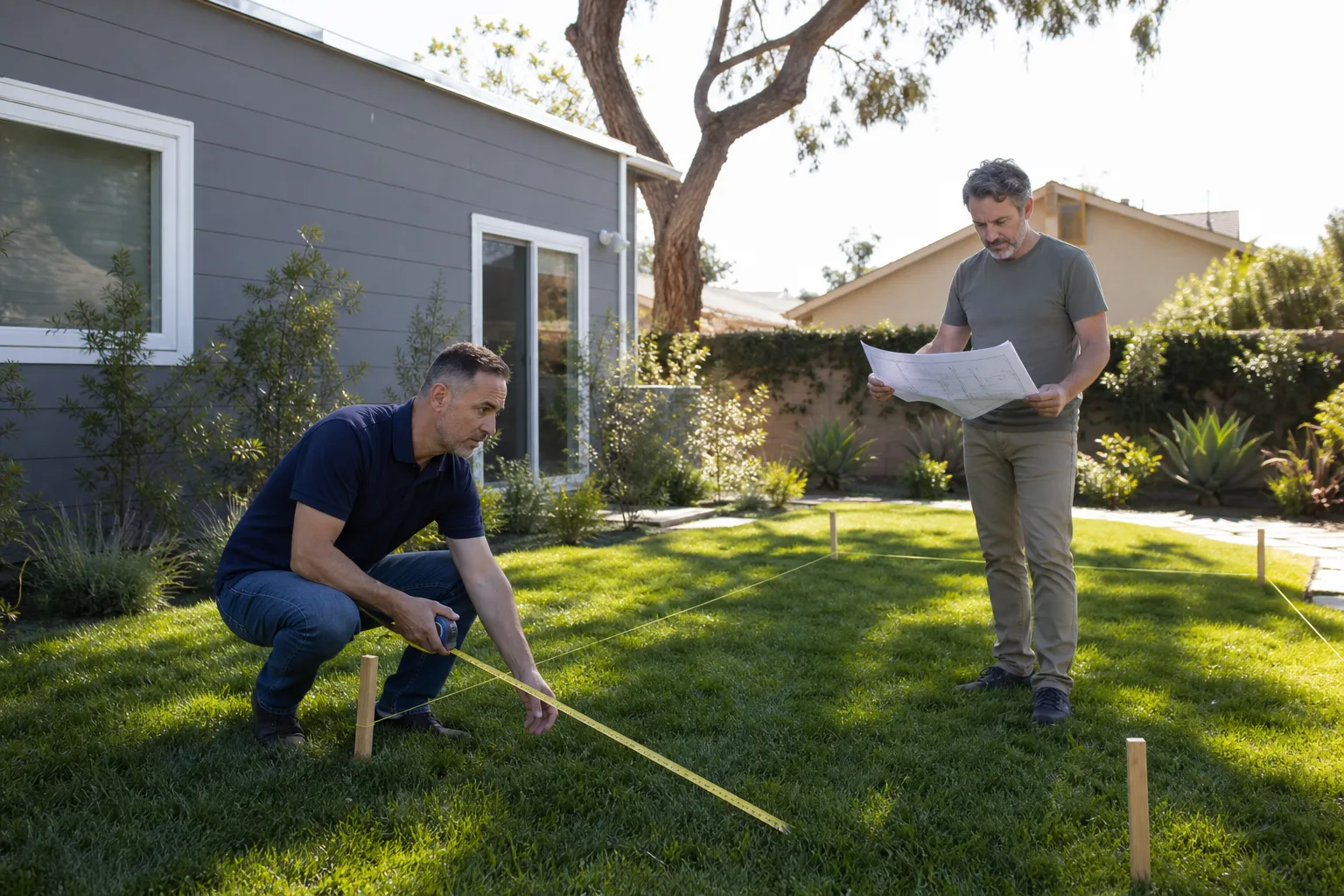
- Setback and lot coverage math. Your proposed ADU footprint is measured against the property line, the main house, and the maximum lot coverage percentage your zoning district allows. This is a calculation error waiting to happen if it’s done in a hurry.
- HOA CCR review. We obtain the current recorded CCRs (not the summary your HOA management company posts online, which is often outdated or incomplete), read the accessory-structure language, and flag anything that conflicts with city code. When city code and HOA rules conflict, the stricter standard controls. Knowing which one that is saves you from building something uninsurable.
- Architectural review submittal package. We prepare the package your HOA’s ARB or ARC requires: site plan, elevation drawings, material samples (including James Hardie cladding options), and a project narrative that answers the committee’s typical questions before they ask them.
- Variance or exception language. If your HOA restricts detached ADUs but your lot is large enough to justify a case for exception, we draft the variance request with the legal and design rationale committees are trained to accept.
This work typically takes two to three weeks, and you’ll see every version of every letter we send. Nothing goes out with your name on it that you haven’t read first.
Why HOA Boards Push Back on ADUs (and How We Get Them to Yes)
HOA boards reject ADU proposals for the same set of reasons across San Antonio. Understanding the pattern changes how you approach the submittal, and a well-prepared application avoids the most common automatic denials.
The Four Most Common HOA Objections
- Appearance and materials. HOAs fear what they can’t visualize. This is where our brand partnerships matter. When a committee sees Tuff Shed or Boxabl attached to a proposal, they picture a backyard shed. When we submit the actual architectural drawings showing James Hardie fiber cement cladding, a finished roofline, and window fenestration that matches the neighborhood vernacular, the committee is evaluating a house, not a structure. That single reframing closes more objections than any argument we could make.
- Rental turnover and tenant behavior. Some San Antonio HOAs prohibit lease terms shorter than 6 or 12 months in accessory units, and some prohibit rental occupancy entirely. If rental use is restricted, we’ll tell you before you spend money on design. Sometimes the HOA will approve the structure but restrict use. That’s still a win if your plan was to house family rather than generate rental income.
- Parking impact. ADUs often consume the space a second or third car would occupy. City code sometimes allows on-street parking credits; HOAs rarely do. If your submittal assumes street parking, expect a denial. We identify the parking requirement upfront and design around it.
- Property value concerns from neighbors. The neighbor who attends the ARB meeting to object is usually worried about their own resale value. The single most effective response we’ve seen in San Antonio is a completed ADU example, with photos, within the same or a comparable subdivision. When possible, we provide that reference in the submittal.
What Actually Works
Complete submittals work. Specific materials work. Brand documentation committees can verify works. What doesn’t work is arguing with volunteer board members about their legal authority. We don’t litigate HOA disputes. We front-load the submittal with enough specificity that the committee has no procedural reason to say no. If they still say no, we’ll tell you honestly whether an appeal is worth your time or whether you should redirect your budget toward a compliant footprint.
Plant Prefab and Boxabl both publish full spec sheets and finish guides online, and we embed those directly in the submittal. A committee member who spends ten minutes on a manufacturer’s site reading about HERS ratings and seismic standards comes back to the meeting with a different posture than the one who’s been imagining a storage container.
Our HOA & Zoning Compliance Process
We don’t hand you a folder and wish you luck. Our compliance process is a step-by-step path with a written price before we start and real-time tracking throughout. Here’s how it runs:
- Parcel audit (free, 24 hours). You call (430) 258-2928, give us your address, and we pull the zoning designation, overlay districts, and any recorded deed restrictions we can access within a day. We tell you before anything is signed whether your project is clearly feasible, flagged with conditions, or heading for a fight.
- Written compliance proposal. If the audit looks workable, we issue a written price for the compliance work itself: the zoning verification, HOA document review, submittal preparation, and the meetings or calls we’ll handle. No verbal estimate. The number you see is the number you pay.
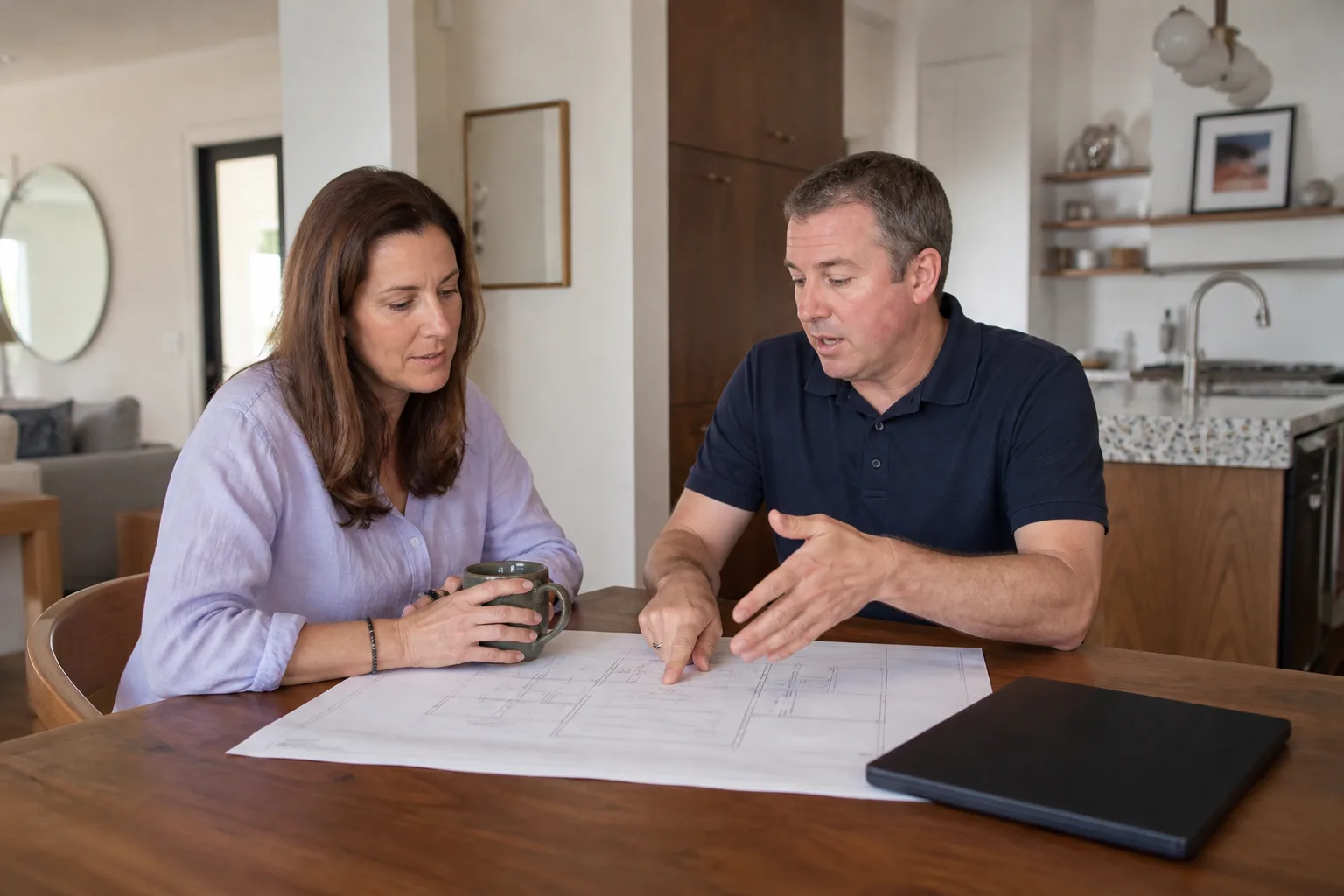
- Document review and conflict analysis. We obtain current, recorded CCRs, compare them against the relevant city code sections, and produce a one-page compliance memo you can actually read. It lists what’s allowed, what’s restricted, what’s discretionary, and what needs a variance. You keep the memo.
- Submittal package preparation. We assemble the package your HOA or NCD board requires: site plan drawn to scale with setbacks labeled, elevation renderings, material and brand documentation, the compliance memo, and any variance language needed. You approve every page before it ships.
- Submission and follow-through. We submit on your behalf, handle the follow-up questions from the committee, and attend the hearing with you (virtually or in person) to answer technical questions. We stay on the file until you have a written approval, a conditional approval, or a denial we can evaluate together.
- Handoff to permitting. With HOA and zoning sign-off in hand, the ADU Design & Permitting work proceeds with a clear path. The compliance file becomes the foundation for the permit submittal, and the city review moves faster because the conflict questions are already resolved.
Every step is tracked in writing. You’ll know exactly where your file sits, what’s been submitted, and what the next milestone is. No phone tag, no mystery. If you call, a live human answers.
HOA & Zoning Compliance Pricing in San Antonio
Here’s what you should budget, based on what we see across San Antonio.
| Compliance Service | Typical Range | What It Includes |
|---|---|---|
| Zoning verification letter + parcel audit | $150 – $400 | City zoning letter, overlay check, floodplain and easement screen |
| HOA CCR document review | $350 – $800 | Current recorded CCRs pulled, ADU-relevant clauses summarized in plain English |
| Architectural review submittal package | $600 – $1,500 | Site plan, elevations, brand documentation, project narrative, variance language if needed |
| Full HOA & zoning compliance bundle | $1,200 – $2,500 | Everything above plus submission, follow-up, and hearing attendance |
| Bundled into full ADU project | Included in the written project price | When you build with us, compliance is built into the fixed price. No separate line item. |
The spread depends on your HOA’s submittal requirements, whether a public hearing or board meeting attendance is needed, and how much variance language we have to draft. A simple deed-restricted subdivision in Alamo Ranch is at the low end. A historic district property in Monte Vista or a lot with a drainage easement and an active violation file is at the high end.
What affects cost most is the document discovery phase. Some San Antonio HOAs file current CCRs with Bexar County and make them available in a day. Others have management companies that answer requests on their own schedule, and we can’t make them move faster. We can tell you early how cooperative your HOA’s management company is, because we’ve dealt with most of them.
Estimates are free. Call (430) 258-2928 and we’ll give you a real number for your specific property, in writing, before any work begins.
Common Mistakes San Antonio Homeowners Make
Here’s what we routinely see from homeowners who try to run compliance on their own, or who hire a contractor that treats HOA review as a formality.
- Applying for a building permit without checking the HOA first. The city will happily issue a permit for a structure your HOA then orders you to stop building. The permit gets yanked, the city’s stop-work order goes up, and you’re left with a hole in the ground and a legal mess. HOA review should happen before the permit submittal, not after.
- Building to city code and assuming the HOA can’t override it. Deed restrictions are private contracts. They can absolutely be stricter than city zoning, and courts routinely enforce them. The stricter standard always controls.
- Burying the ADU in a general renovation submittal. Some homeowners try to slip an ADU past the ARB inside a larger “home improvement” package. Committees aren’t stupid. A hidden ADU that gets discovered later creates a violation file that’s harder to clear than a straightforward denial would have been.
- Submitting the manufacturer’s stock drawings unchanged. A Boxabl or Tuff Shed unit on a stock plan sheet may not show the specific site conditions, setbacks, or materials your HOA cares about. We customize the submittal so the committee sees your project on your lot, not a catalog page.
- Giving up after the first denial. Many San Antonio HOA denials are fixable. The committee usually tells you exactly what’s missing. If you walk away, you’ve lost a few weeks and a submittal fee. If you fix the gaps and resubmit, you’re often approved on the second pass.
What Zoning Allows in San Antonio – The Plain-English Version
You don’t need to read the Unified Development Code. Here’s the summary that matters for ADUs.
Size Limits
Detached ADUs in San Antonio are generally limited to 800 square feet or 50% of your main home’s floor area, whichever is smaller. If your main house is 1,600 square feet, your ADU caps at 800 square feet. If it’s 1,200 square feet, your cap is 600. Attached ADUs (conversions of existing space) follow different rules and often allow more square footage because they don’t trigger new lot coverage.
Setbacks and Placement
San Antonio requires 5-foot side and rear setbacks for detached ADUs in most residential districts. Some older neighborhoods operate under 3-foot setbacks. Your side-yard setback may also widen if the ADU is the same height as the main dwelling. Placement within the rear yard is generally required unless the lot is unusually configured. We verify all of this during the parcel audit, not after the architect has drawn a footprint that won’t fit.
Parking
City code requires one additional off-street parking space for an ADU in most districts, though exemptions exist for properties within walking distance (typically a quarter to half mile) of a VIA Metropolitan Transit stop. HOAs may impose additional parking requirements even when the city doesn’t. This is the most common point of conflict we see, and it’s solvable with the right site plan.
Owner Occupancy
San Antonio does not require the property owner to live in the main house or the ADU, a rule change that opened the door for investor-owned rental ADUs. Your HOA may feel differently. Some San Antonio HOAs require owner-occupancy for the primary dwelling if an ADU is rented. We’ll tell you what applies to your subdivision before you pour a slab.
HOA Rules That Actually Matter (and the Ones That Don’t)
Not every CCR clause applies to your ADU, and some clauses that appear to apply actually don’t after the 2022 city code amendments. Here’s what we separate when we review your documents.
Clauses That Usually Control
- Minimum dwelling size requirements. Some HOAs require accessory structures to be smaller than the main home or to meet a minimum square-footage threshold. These almost always apply.
- Setback and placement restrictions. HOA setback requirements often exceed city code. If your HOA says 10 feet from the rear fence, that controls, even if the city allows 5.
- Exterior material and design standards. Committees enforce these actively. James Hardie cladding is almost universally accepted because it reads as traditional siding, which is why we specify it in most submittals.
- Rental and occupancy restrictions. These are enforceable and routinely upheld in Texas courts.
Clauses That Usually Do Not Apply
- Bans on “temporary structures” or “portable buildings.” A permanent, permitted ADU on a slab foundation is not a temporary structure in the eyes of Texas case law, regardless of what the CCR language says. Prefab units from Boxabl and Plant Prefab are permanent structures under this standard. This is a common misreading that we clarify in the submittal.
- Clauses written before San Antonio’s 2022 ADU ordinance. Some older CCRs predate the city’s current ADU rules. Texas courts have generally held that a blanket prohibition on accessory structures does not automatically prohibit an attached ADU, though this is fact-specific and not something to test without legal review.
- Architectural guidelines that reference specific neighborhoods or styles by name. If your HOA’s guidelines reference a subdivision that no longer exists under that name or standards that have been superseded, the current board may decline to enforce them. We’ll tell you if your CCRs are stale.
The point here is not to arm you for a fight with your HOA. The point is that many San Antonio homeowners assume restrictions exist that actually don’t, and they abandon viable projects. A compliance review sometimes produces the opposite of what you expect: it clears the path instead of blocking it.
What the HOA Approval Actually Looks Like
When it goes right, here’s the sequence. You get a written approval letter from the architectural review committee, typically within 30 to 45 days of submittal. Some HOAs in San Antonio move faster; some hold quarterly meetings in the summer and move slower. The approval letter lists any conditions, and most conditions are minor: a specific paint color, a fencing requirement, or a landscape buffer.
With that approval letter in hand, the city permit application proceeds with a clean file. The plan reviewer sees a project that’s already cleared the private governance layer, and the review typically moves faster because the obvious questions have been answered. Then construction begins, and the 365-Day Done Right Promise covers the build itself. If anything we do isn’t right within a full year, we make it right. That’s in writing, on every project.
If your HOA denial does happen, you have options. Texas law gives homeowners the right to appeal HOA decisions, and many San Antonio HOAs have an internal appeals process. We’ll help you evaluate whether the denial was procedural (fixable with a corrected submittal) or substantive (the board simply won’t approve an ADU under any circumstances). If it’s substantive, we’ll tell you honestly and help you decide whether the fight is worth the cost.
FAQs – HOA & Zoning Compliance
How much does HOA and zoning compliance cost in San Antonio?
As a standalone service, HOA and zoning compliance in San Antonio typically costs $1,200 to $2,500, with a simple zoning verification letter running $150 to $400 on its own. When you build your ADU with Benson ADU San Antonio, compliance is bundled into the written project price, so there’s no separate line item. Call (430) 258-2928 for a free estimate with a real number for your property.
Can you fix an HOA violation so I can build my ADU?
Yes, we resolve open HOA violation files as part of the compliance process, and most violations related to accessory structures or property conditions can be cleared within 30 to 60 days once a corrective plan is submitted. Start by calling us at (430) 258-2928 with the violation notice in front of you, and we’ll tell you what it’ll take to clear the file.
Will my HOA approve a prefab ADU?
In our experience, San Antonio HOA committees approve prefab ADUs about as often as site-built ones when the submittal shows actual architectural drawings, finished exterior materials like James Hardie cladding, and brand documentation from recognizable manufacturers like Boxabl or Plant Prefab. The rejections usually trace to stock photos or vague “modular unit” language in the package. We build the submittal to avoid that.
How long does HOA approval take in San Antonio?
Most San Antonio HOA architectural review committees respond within 30 to 45 days of a complete submittal, though some boards that meet quarterly can stretch the timeline to 60 days or more. City zoning verification letters typically arrive in 2 to 10 business days depending on the fee tier. We track every deadline and follow up so your file doesn’t sit on a desk.
What happens if the city approves my ADU but the HOA says no?
If your San Antonio HOA rejects your ADU after the city has approved the permit, the HOA’s deed restrictions control, and building against them puts you in legal conflict with your own association. We strongly recommend resolving HOA review before the city permit is filed. If you’re already in this situation, call (430) 258-2928 and we’ll review the denial letter with you to figure out whether it’s fixable.
Get Your Compliance Review Started
If you’re planning an ADU in San Antonio, the cheapest mistake you can make is skipping compliance and the most expensive mistake is doing it late. Call (430) 258-2928 and we’ll run a free parcel audit on the spot. You’ll know within a day whether your project is clear, flagged, or fighting an HOA that doesn’t want you to build. Either way, you’ll know where you stand, in writing, without spending a dollar. That’s how every project should start.
Written by Troy Eastman, Owner at Benson ADU San Antonio, serving San Antonio.