Tuff Shed Site Prep & Utilities: The San Antonio Owner’s Guide
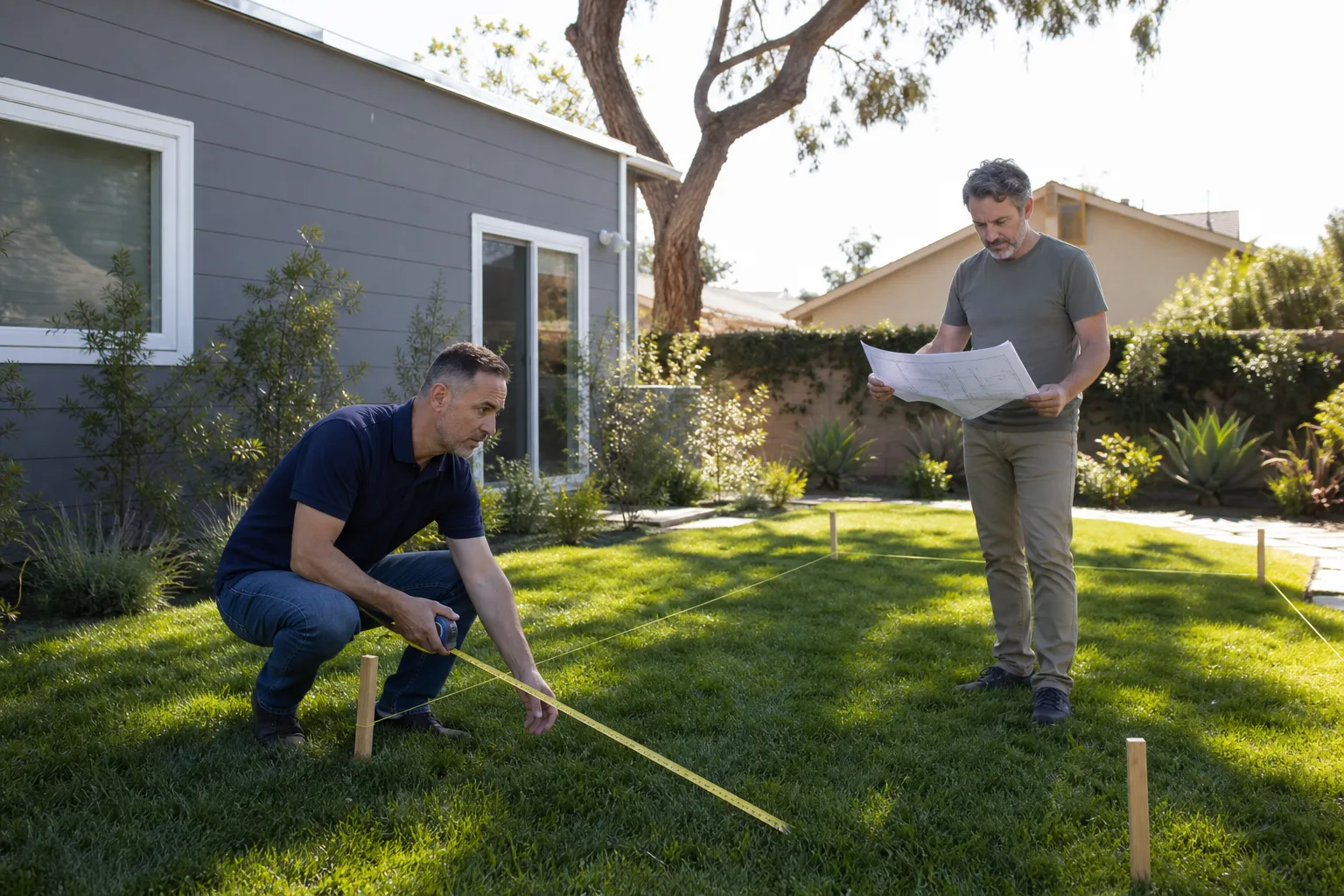
Site prep and utility work for a Tuff Shed in San Antonio typically runs $1,800 – $6,500 installed, depending on whether you’re dealing with a simple gravel pad or a full concrete slab with electrical trenching. We stock and install the site prep materials and utility components Tuff Shed owners need most, and we can usually have a crew out to assess your site within a few days. Most owners discover something’s wrong when the shed doors start dragging, the floor feels spongy, or a circuit keeps tripping inside the shed three months after it was delivered.
Here’s the thing about Tuff Shed site prep that most people don’t learn until it’s too late: the shed shell itself is built to a consistent standard, but the foundation and utilities underneath it are only as good as whoever did the site work. In San Antonio, our clay-heavy soil expands and contracts with every rain-dry cycle, and that movement is brutal on shed foundations that weren’t graded and compacted correctly from day one. The shed will be fine. The ground under it won’t be.
Key takeaways before we go deeper:
- We’re an independent builder and installer, not affiliated with Tuff Shed, but we work with their specs daily and stock compatible site prep materials.
- Every site prep job includes a written price before work starts, per The Relay Visibility Guarantee.
- The single biggest cost driver in San Antonio is soil movement: poor drainage and clay expansion cause most shed foundation failures we see.
- Utility work (power, water, data) on a Tuff Shed is handled separately from the shed delivery, and most owners underestimate the trenching cost until it’s quoted.
Which Tuff Shed Models This Applies To
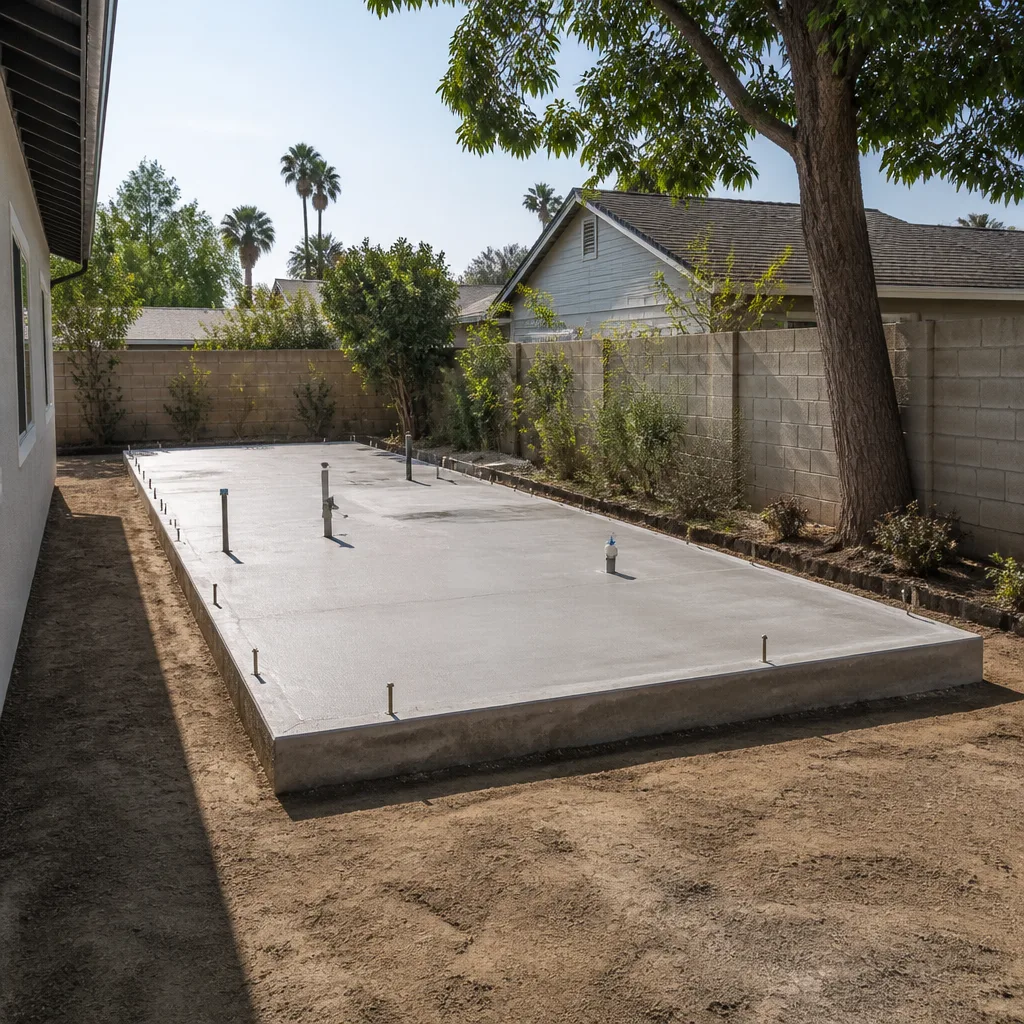
Site prep and utility needs vary by model line, and it pays to know which Tuff Shed product you’re working with before anyone gives you a number. The Premier PRO series, Premier series, and PRO series all sit on different foundation footprints, and larger Premier PRO models with lofts or custom layouts have different anchorage requirements than a standard 8×10 Premier. If you added a studio or finished interior through Tuff Shed’s build options, your utility runs are longer and your panel placement matters more than it would on a bare storage shed.
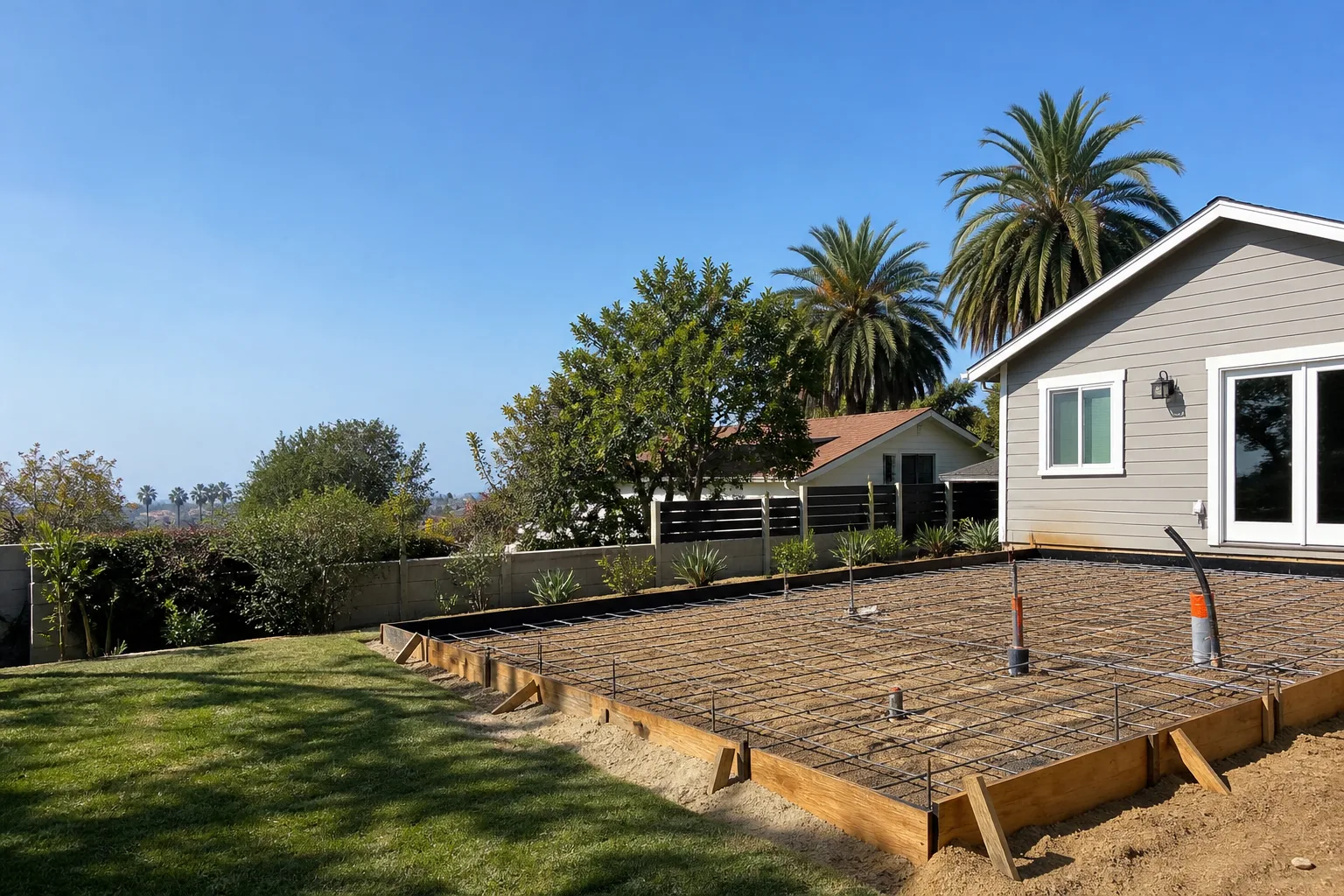
The fastest way to identify what you have: look for the metal data tag on the shed’s interior wall near the door, or check your order paperwork for the series name. Measure the overall footprint from outside edge to outside edge. A shed that’s 10×12 or smaller is generally fine on a well-compacted gravel pad with treated lumber perimeter, but Tuff Shed’s own installation guidance recommends a reinforced concrete slab for anything with a finished interior, and we agree for San Antonio soil. The OEM-versus-aftermarket decision for site prep isn’t really about branded parts: there’s no Tuff Shed-branded gravel or concrete. What matters is whether the materials meet the spec for your shed’s weight, your soil type, and your local drainage situation. We source materials that meet or exceed Tuff Shed’s published foundation requirements.
One compatibility gotcha worth checking early: if you’re replacing a shed on an existing slab, verify the slab dimensions against the new shed’s base rail dimensions. A half-inch overhang looks fine on paper and creates a moisture wicking problem in reality. Water splashes on concrete, wicks up into the shed’s bottom plate, and you get a rot problem that looks like a shed failure but is actually a slab size problem.
Signs Your Tuff Shed Site Prep & Utilities Is Failing
- Doors drag or won’t latch after a rain. The shed frame racks slightly when the ground under one corner shifts or sinks. This points to differential settlement, usually from a pad that wasn’t compacted in lifts or water pooling against one side of the foundation. In San Antonio’s clay, this shows up within the first two wet-dry cycles.
- The shed floor feels spongy or bounces in one spot. Moisture is getting under the flooring system, either from a missing vapor barrier, insufficient clearance, or a slab that’s trapping water. By the time you feel it, the subfloor’s already compromising.
- You can see daylight under the shed’s bottom rail on one side. The foundation’s settled unevenly. Left alone, this puts permanent torque on the shed frame and starts separating wall panels at the corners.
- Outlets trip repeatedly or lights flicker when you run anything with a motor. The electrical run to the shed is undersized or improperly trenched for San Antonio’s temperature swings. We regularly see sheds wired with interior-grade Romex run through buried conduit, which fails within a few seasons.
- Ramps or steps pull away from the shed at the sill. The approaches were poured or set separately from the main slab, and soil movement is slowly separating the two. It starts as a trip hazard and eventually becomes structural.
Replacement Cost & What’s Included
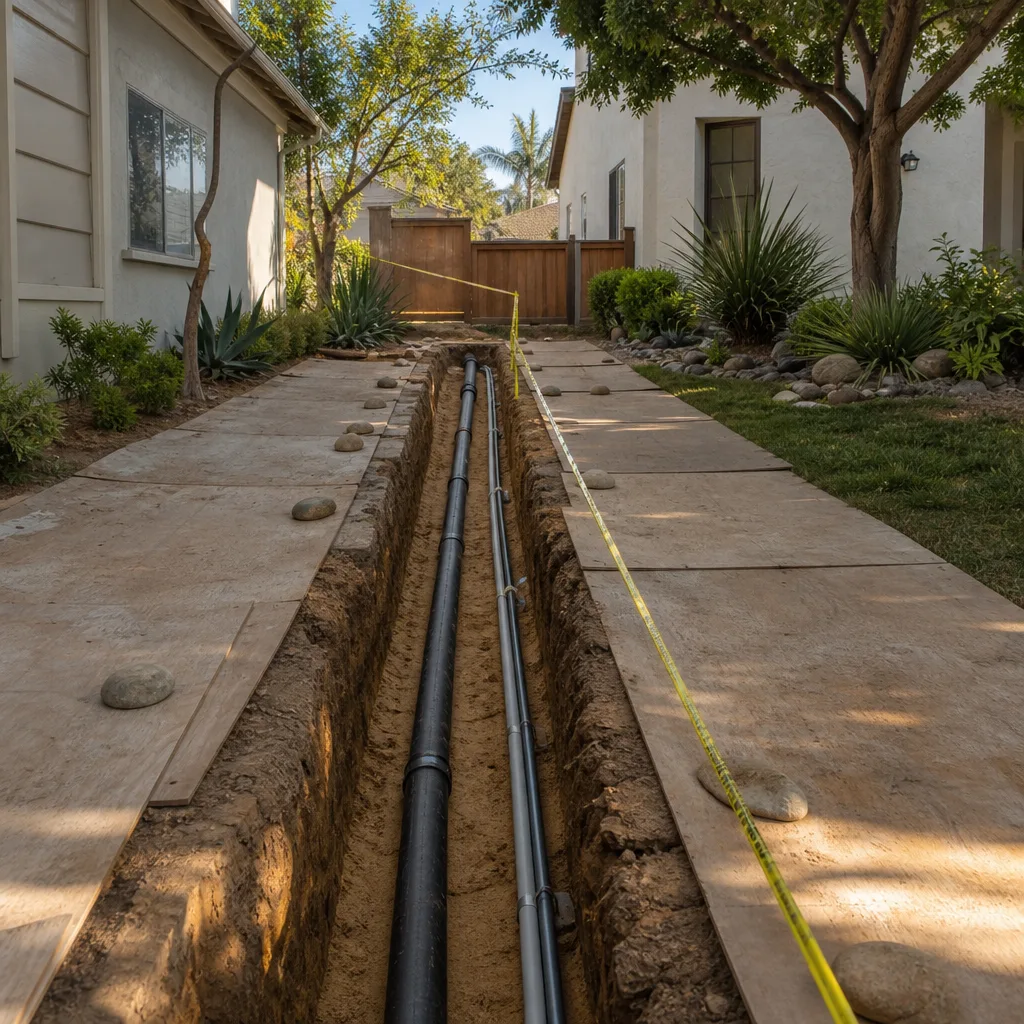
For a standard Tuff Shed in the San Antonio market, here’s the honest price picture:
| Scope | Typical Installed Range |
|---|---|
| Gravel pad with treated wood perimeter (8×10 to 10×12 shed) | $800 – $1,800 |
| Reinforced concrete slab (10×12 to 12×16 shed) | $2,500 – $5,000 |
| Full site prep including demo, grading, drainage, new slab | $4,000 – $8,500 |
| Electrical run with subpanel, trenching, and outdoor-rated circuit | $1,200 – $3,200 (added to any above) |
| Water or data line trenching | $35 – $65 per linear foot |
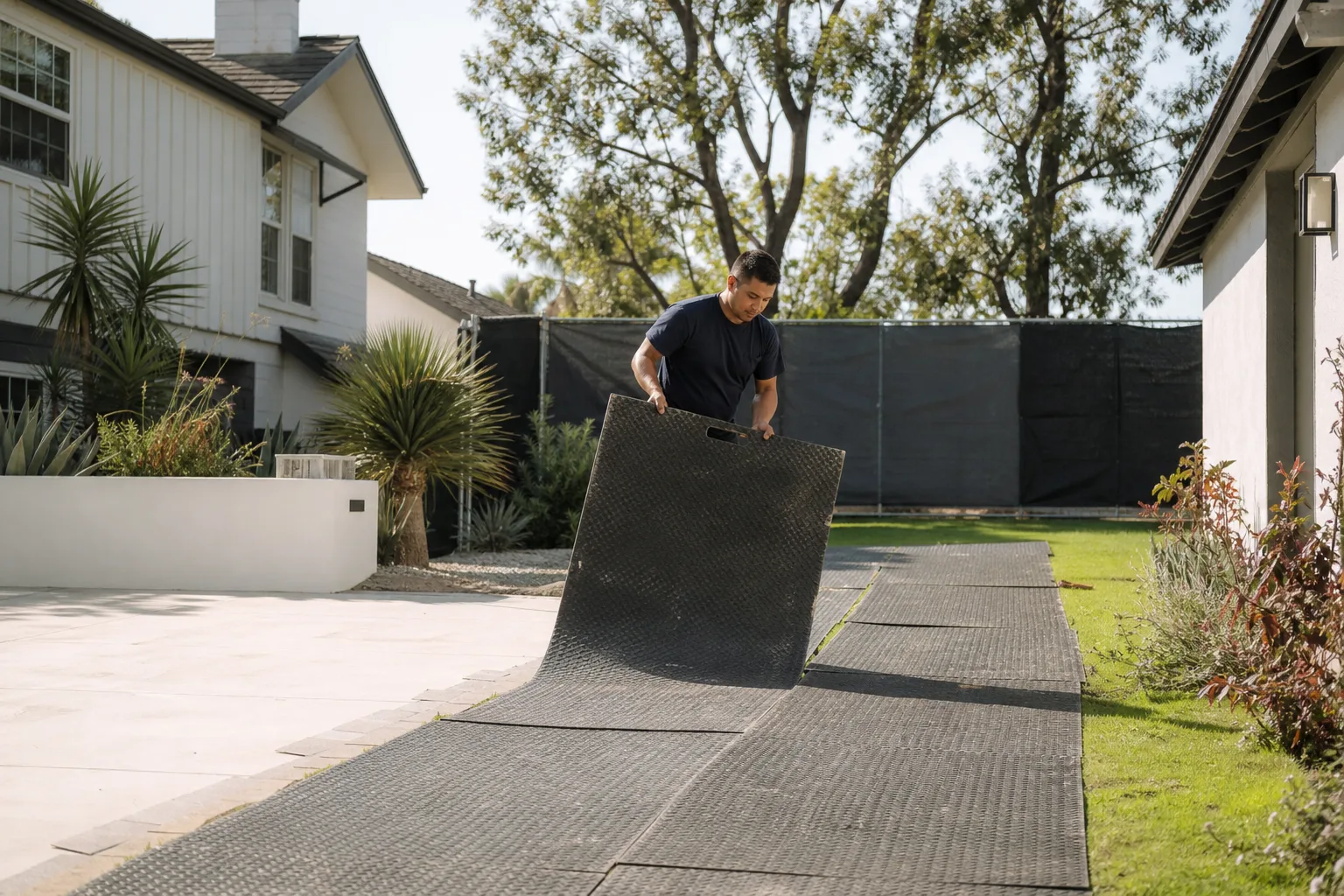
What drives the range: soil condition, access for a trenching machine, whether the old foundation has to be broken out and hauled, and whether your property’s on clay that needs extra compaction work. Every quote we write in San Antonio includes parts, labor, haul-away, and a written price before we start. No change orders at the door. The 365-Day Done Right Promise covers the site work: if something settles, shifts, or separates within a year, we come back and make it right at no charge.
DIY or Call Us?
You can absolutely handle a few things yourself. Check your shed’s downspout positioning and grade the ground away from the slab. Clear vegetation that’s growing against the bottom rail. That’s homeowner-level work worth doing. What gets people in trouble is trenching for utilities: in San Antonio, hitting a buried gas line or fiber optic line isn’t a theoretical risk, it’s a common call that ends with a utility company bill and a mark on your property record. Electrical work on a subpanel is another line we’d draw at: improperly sized breakers and grounding in Texas heat genuinely create fire risk. If the part failing is the ground under your shed or the power going to it, call a licensed pro. We’re at (430) 258-2928 and the call’s free, even if it’s just to sanity-check a quote you got somewhere else.
FAQs
A properly built concrete slab or compacted pad in San Antonio should last 20-30 years with basic drainage maintenance, but clay soil movement shortens that considerably if the base wasn’t prepped right. Watch for the signs we listed above in the first two years, and address drainage issues early. Call (430) 258-2928 if you want us to look at the existing slab under your shed – we’ll tell you whether it’s repairable or a redo.
Small settlement on a gravel pad can usually be corrected by re-leveling, adding compacted AB, and re-setting the perimeter. A cracked or heavily settled concrete slab almost always means partial demo and repour, because patching over movement just cracks again. The bigger question is drainage: any repair that doesn’t fix water flow is a temporary touch-up. We’ll walk the site and give you the straight answer either way.
Most residential Tuff Shed site prep jobs take one to three days depending on scope: a gravel pad goes in a day, a concrete slab spans two days including demo and forms, and adding an electric run typically adds half a day to a day. San Antonio’s temp swings mean we cure concrete with extra attention in triple-digit months. You’ll get a written timeline before we start, and a live person answers the phone if you ever need a status check.
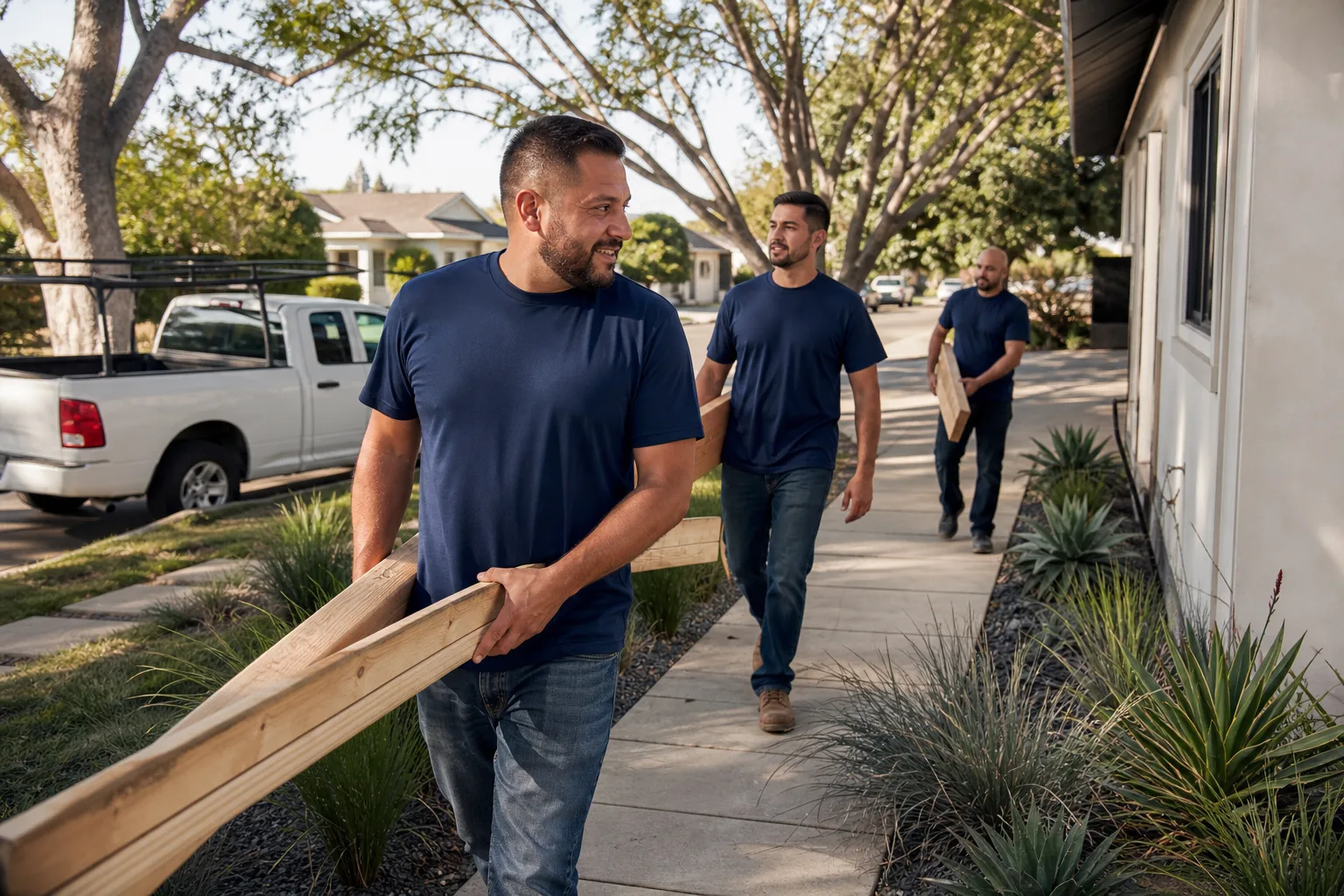
We keep the standard site prep materials on the truck: AB, crushed base, treated lumber, vapor barrier, anchors, and the outdoor-rated electrical components that Tuff Shed specifications call for. Specialty items like steel ramps or custom threshold details may take a few days to source. Everything gets quoted at the same written price, whether it’s on the truck or ordered in.
Written by Troy Eastman, Owner & Builder, Benson ADU San Antonio at Benson ADU San Antonio, serving San Antonio and nearby areas.