James Hardie New Detached ADU: The San Antonio Owner’s Guide
A new detached ADU clad in James Hardie siding or trim in San Antonio typically runs $185,000 to $320,000 all-in, depending on square footage, site prep, and the specific Hardie product line you choose. We stock and install HardiePlank lap siding, HardiePanel vertical siding, HardieTrim boards, and HardieSoffit for new detached ADUs across San Antonio, with most material packages available within 5 to 10 business days from order. Homeowners usually come to us when they’ve spotted cracked planks, warped trim, or water staining around their existing Hardie installation, or when they’re planning a detached ADU from scratch and want the cladding specified correctly the first time.
Here’s the thing about James Hardie on a detached ADU in this climate: San Antonio’s heat and humidity cycle punishes installation mistakes harder than the material itself. Hardie products are fiber cement, which means they don’t rot or warp like wood, but they do crack when nailed too close to an edge, and they do absorb water if the bottom edge isn’t sealed or trimmed properly. We’ll get into exactly what fails and why below.
Key Takeaways
- James Hardie fiber cement is the right call for San Antonio’s climate, but only if the install details are correct from day one.
- Most Hardie failures on detached ADUs trace back to three things: improper fastening, missing flashing, or ground-contact clearance issues.
- We provide a written price before any work starts, and every Hardie installation is covered by our 365-Day Done Right Promise.
- You can reach a live person at (430) 258-2928 any time to talk through your project or schedule a free estimate.
Which James Hardie Models This Applies To
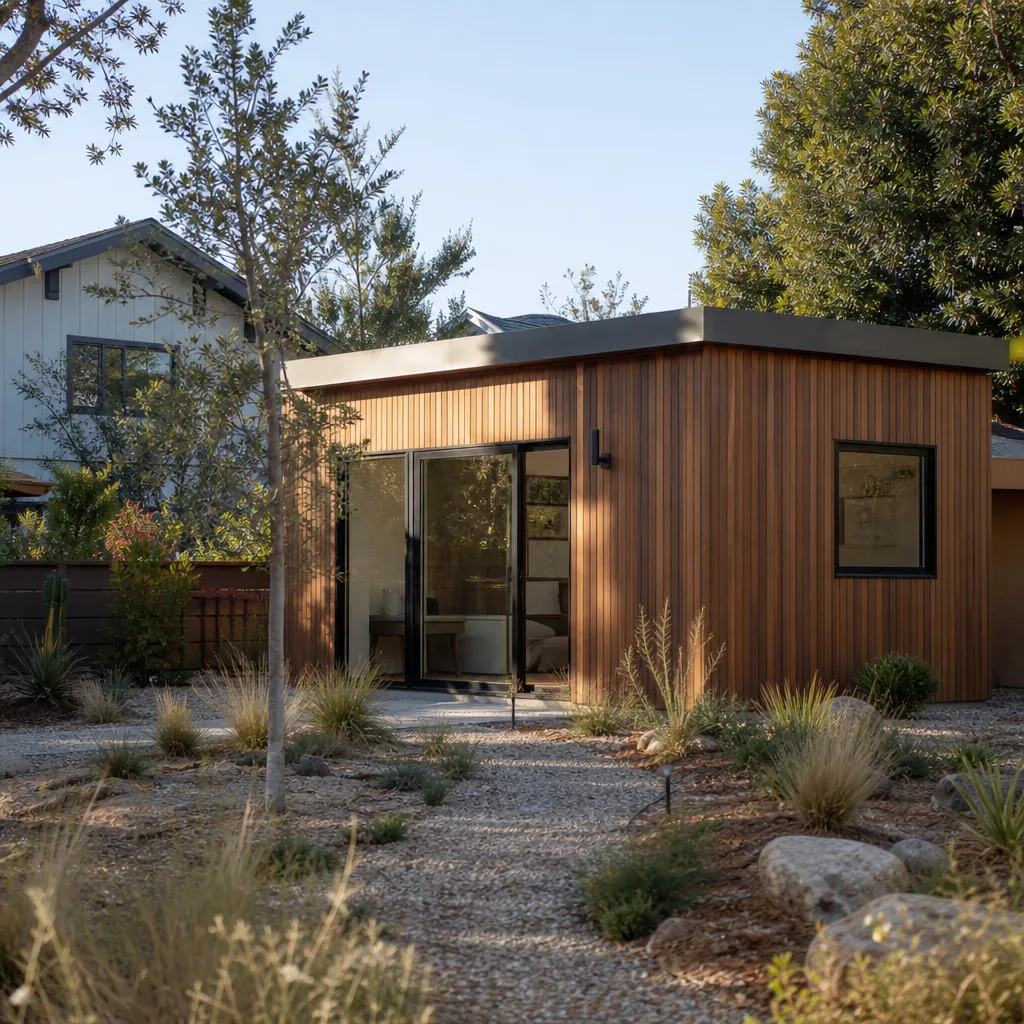
James Hardie doesn’t make a single product called “new detached ADU,” so this page covers the Hardie components that go into building or repairing the exterior of a detached accessory dwelling unit in San Antonio. The four products we work with most are HardiePlank lap siding (5/16″ thick, available in 4″, 5″, 6″, 7″, and 8″ exposures), HardiePanel vertical siding (4′ x 8′, 4′ x 9′, and 4′ x 10′ sheets), HardieTrim boards (5/4″ and 4/4″ thicknesses, up to 16′ lengths), and HardieSoffit for eave overhangs. Each has a different job, and each fails differently.
One compatibility gotcha we see regularly: HardieTrim and HardiePlank use different fastening schedules and different edge treatments. You can’t just swap one for the other mid-project and expect the warranty to hold. James Hardie’s published installation requirements are specific about fastener type (corrosion-resistant roofing nails or ribbed screws), fastener placement (no closer than 3/8″ from any edge), and joint flashing. If your existing Hardie was installed with drywall screws or staples, that’s the failure point, not the product.
On the OEM-versus-aftermarket question for James Hardie specifically: we use genuine James Hardie products on every ADU we build or repair. There are quality fiber cement alternatives on the market, but Hardie’s ColorPlus finish system carries a 15-year limited warranty on paint adhesion that aftermarket boards simply don’t match. For a detached ADU in San Antonio, where the sun beats on the south and west elevations for six months straight, that factory-applied finish matters.
Signs Your James Hardie New Detached ADU Is Failing
- Cracks radiating from nail heads. Fasteners were driven too close to the board edge or overdriven. Fiber cement doesn’t flex like wood, so a tight nail becomes a stress point, and the crack always starts there and runs outward.
- Soft, swollen, or crumbling bottom edges. The siding was installed too close to grade or hardscape. James Hardie requires a minimum 6″ clearance above finished grade, and in San Antonio’s clay-heavy soil, that clearance is non-negotiable because the ground doesn’t just stay put after heavy rain.
- Gaps opening at butt joints. HardiePlank joints must be flashed and caulked with a high-quality, paintable sealant. If the original installer skipped flashing, boards shrink and expand with temperature swings (and San Antonio sees 40-degree swings in a single day during spring), pulling joints apart.
- Peeling or bubbling paint on ColorPlus boards. This almost always traces to a cut edge that wasn’t primed. Factory-finished Hardie is sealed on the face, but a raw cut edge absorbs moisture like a sponge. If it was cut on-site and not touched up, the board starts failing from the edge inward.
- Mold streaks or black staining under window and door trim. Missing head flashing above openings lets water run down the wall behind the siding. By the time you see the streak on the face, the sheathing underneath has been wet for months.
Replacement Cost & What’s Included
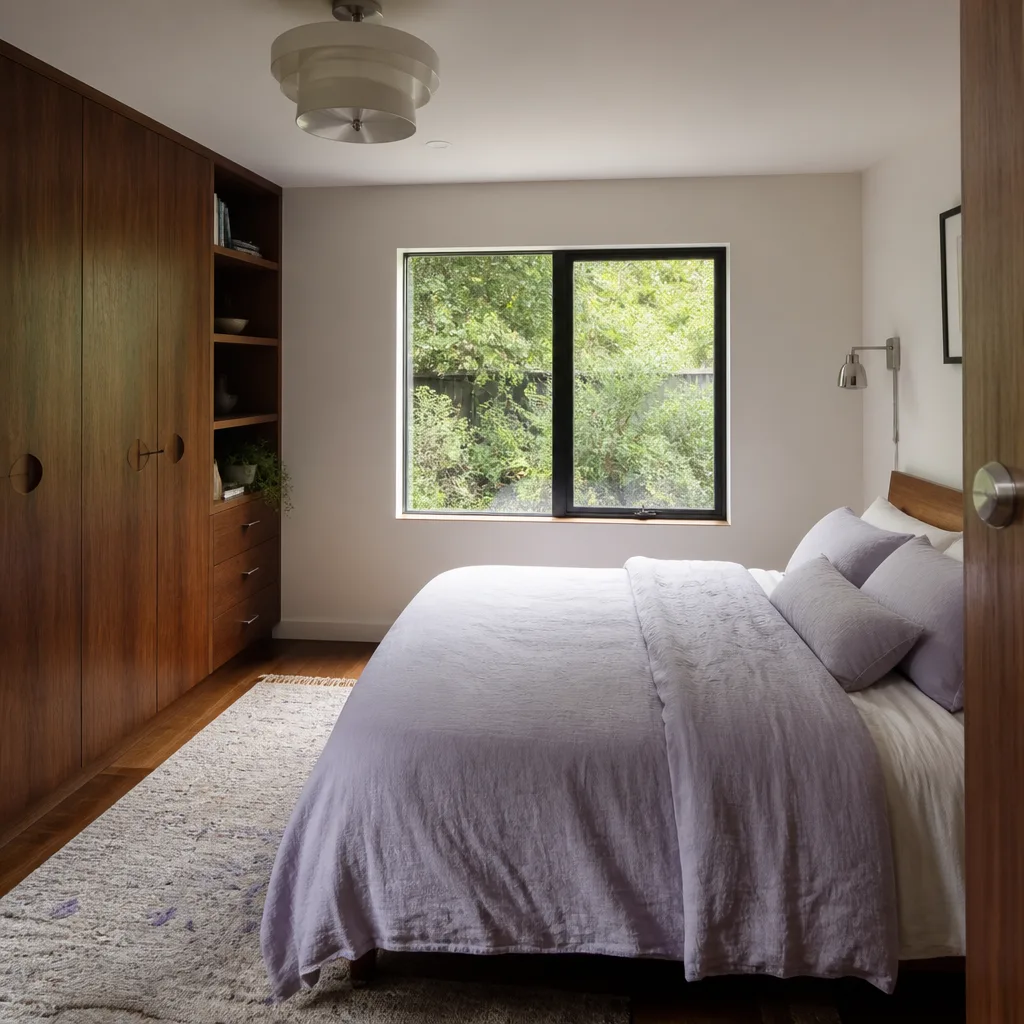
For James Hardie repair or full replacement on a detached ADU in San Antonio, here’s what you’re looking at:
| Scope | Typical Range |
|---|---|
| Targeted repair (replace 3-5 damaged HardiePlank boards, reseal joints, touch-up paint) | $450 to $900 |
| Full siding replacement on a 400 sq ft detached ADU (HardiePlank, labor, disposal, paint) | $9,500 to $14,000 |
| Complete exterior package for a new 400-600 sq ft ADU (HardiePlank, HardieTrim, HardieSoffit, flashing, paint) | $18,000 to $28,000 |
| Full new detached ADU build with Hardie exterior, finished interior, permits, utilities | $185,000 to $320,000 |
The spread comes down to access (a tight San Antonio lot with a 4-foot side yard costs more to work in than an open rear yard), the condition of the existing sheathing and weather barrier, and whether we’re matching a specific Hardie color from years ago. Every price we quote is written and signed before any work starts. No change orders, no “we found something unexpected” pricing at the door. The number goes on paper first. Everything else follows from there.
All Hardie work carries our 365-Day Done Right Promise: if anything on that installation fails within a year, we fix it. For free. In writing.
DIY or Call Us?
Fiber cement isn’t as dangerous to work with as, say, high-tension garage springs or a live electrical panel, but it’s not a weekend project either. Hardie boards are heavy, they produce silica dust when cut, and they require specific blade types and cutting methods (scoring and snapping or a polycrystalline diamond-tipped circular saw blade with proper dust collection). Breathing that dust isn’t good for you, full stop. We wear respirators onsite for a reason.
What you can safely check yourself: measure the clearance between your siding’s bottom edge and the ground. If it’s under 6 inches, that’s a problem you can document and bring to the conversation. Check joints around windows and doors for missing caulk or gaps. Look at fastener heads to see if they’re proud of the surface or buried under a half-inch of paint. But when it comes to pulling and replacing boards on a detached ADU, especially one with occupied living space behind the wall, this is a job for someone with a dust mask, a calibrated nail gun, and a written guarantee. That’s us.
Call (430) 258-2928 and we’ll give you an honest assessment. Estimates are free, and the price we write down is the price you’ll pay if you decide to move forward.
FAQs
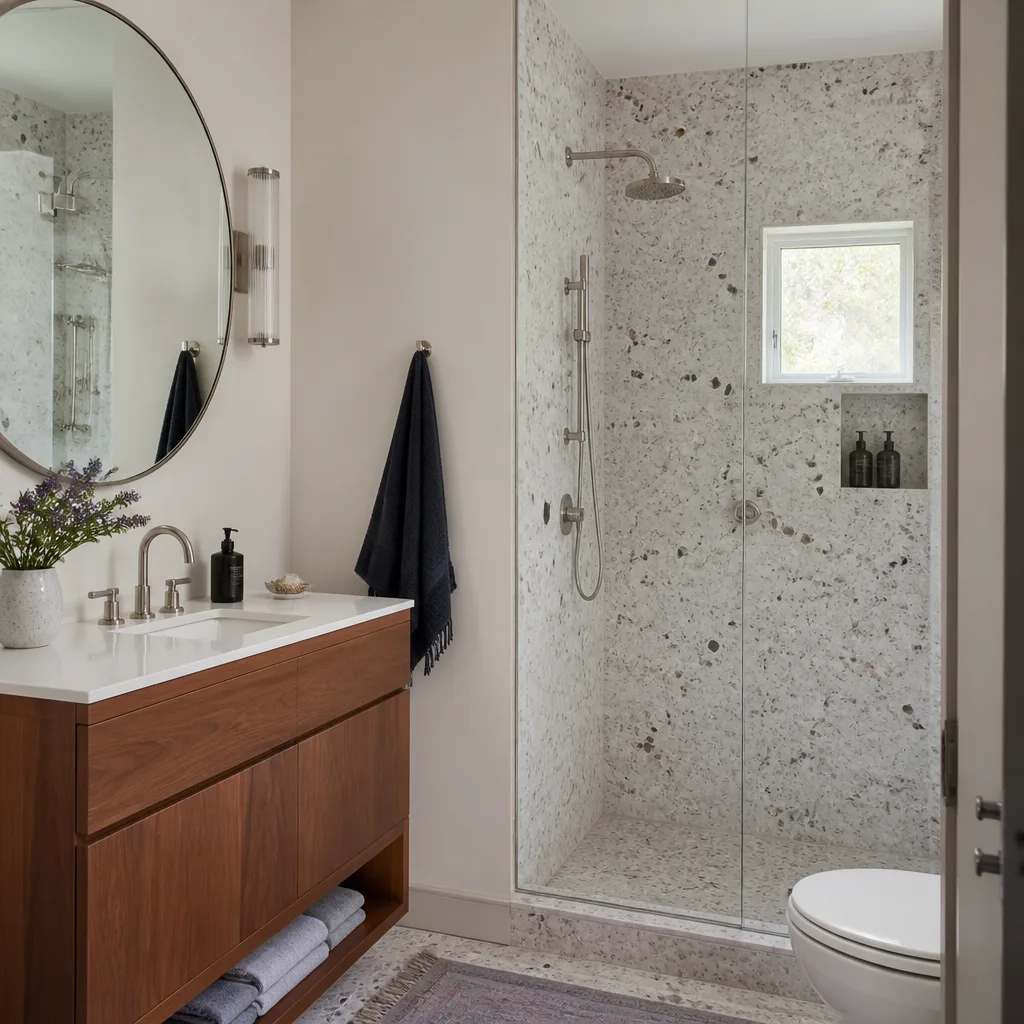
James Hardie fiber cement carries a 30-year limited product warranty, and with correct installation and the required clearances maintained, we expect 30 to 50 years of service life on a detached ADU in San Antonio’s climate. The variable is never the board itself; it’s the flashing, the fasteners, and the ground clearance. Get those right and the siding will outlast your roof twice over. Call (430) 258-2928 if you want us to inspect your existing installation.
Small cracks can sometimes be patched with a quality exterior sealant, but any board with swelling, delamination, or cracks radiating from fasteners should be replaced rather than repaired because the structural integrity of the fiber cement is already compromised. Patching buys you months, not years. For a detached ADU that’s generating rental income or housing family, replacement is almost always the smarter call. Call (430) 258-2928 for a free estimate and we’ll tell you straight which boards can stay and which need to come out.
A targeted repair of three to five boards takes one day on site. A full siding replacement on a 400 square foot detached ADU typically takes 4 to 6 working days from first board off to final walkthrough, assuming the sheathing underneath is sound. If we find water damage behind the siding on day one, the schedule extends, and because the price is in writing before we start, you’ll know the full scope and cost of any sheathing repair before we touch it. Call (430) 258-2928 to get your project on the calendar.
We stock common HardiePlank profiles and colors in our San Antonio yard, including the smooth and cedar-texture 5-inch and 6-inch exposures in neutrals like Arctic White, Cobble Stone, and Monterey Taupe. Specialty colors, 8-inch exposure, and long-length HardieTrim boards are special-ordered with a 5 to 10 business day lead time. We also work with Abodu, Cover, and Dvele prefab systems, all of which can be specified with James Hardie cladding from the factory. Call (430) 258-2928 and we’ll check stock while you’re on the phone.
Benson ADU San Antonio is an independent service provider and is not affiliated with James Hardie. We build with and install their products because we believe they’re the right material for this climate, not because anyone tells us to.
Written by Troy Eastman, Owner & Builder, Benson ADU San Antonio at Benson ADU San Antonio, serving San Antonio and nearby areas.