James Hardie ADU Design & Permitting: The San Antonio Owner’s Guide
We stock, spec, and install James Hardie-compatible siding, trim, and panel systems for ADU design and permitting projects across San Antonio, with typical installed cladding costs running $9,000 to $18,000 for a 600 – 800 sq ft accessory dwelling unit depending on product line and elevation complexity. Most homeowners discover they need us when their existing HardiePlank has begun to fail at the butt joints, or when the city’s permit reviewer flags their original cladding choice for a fire-resistance or setback-related correction. San Antonio’s combination of intense UV, hail exposure, and freeze-thaw cycles means Hardie products hold up well, but only when the gap, flashing, and fastening details are dialed in correctly on day one.
Which James Hardie Models This Applies To
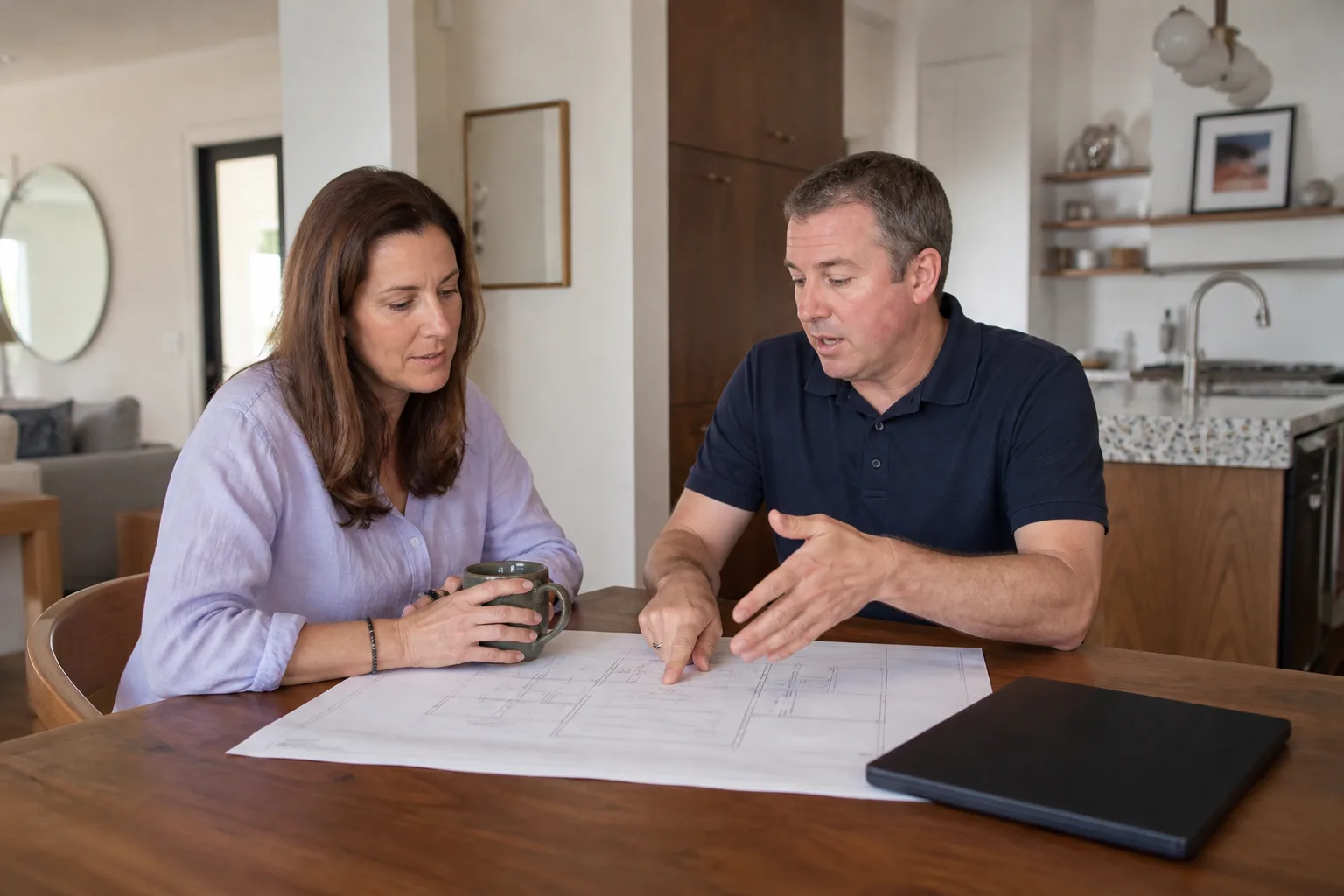
For San Antonio ADU projects, the three James Hardie lines we work with most are HardiePlank lap siding (5/16 in. and 7/16 in. thicknesses), HardiePanel vertical siding, and HardieTrim boards in the 4/4 and 5/4 profiles. The product label on the back of each board tells you the plant code, manufacturing date, and the specific product family, but the real compatibility question is about what’s already on the structure. If you’re matching an existing home’s lap siding for a new ADU, the exposure width needs to be measured on at least three installed boards, not read from the old packaging. That’s the getcha: HardiePlank’s nominal 8.25 in. width can be installed at 6, 7, or 8 in. exposures, and matching an ADU to a house at the wrong exposure looks wrong from the curb, even though both are technically the same product.
On the OEM versus aftermarket question for James Hardie specifically: we recommend genuine Hardie products for anything the permit reviewer or appraiser will see. ColorPlus factory finishes carry a 15-year finish warranty and are printed with a code that makes a warranty claim straightforward. Paint-on-site alternatives can work, but San Antonio’s sun is hard on field-applied coatings, and we regularly see color fade differences between field-painted trim and factory-finished lap siding within three or four years. For hidden components like starter strips, flashing, and housewrap, quality third-party products are often the better value, and we’ll say so outright.
Signs Your James Hardie ADU Design & Permitting Is Failing
- Butt joints opening up or caulk lines cracking. HardiePlank expands and contracts with moisture and temperature changes. When the required 1/8 in. gap wasn’t left between boards, the boards push against each other, and the caulk or the board edge itself fails. We see this most often on south- and west-facing elevations in San Antonio, where the afternoon sun hits hardest.
- Wavy rows of lap siding, especially on the lower courses. This usually means the framing behind the cladding wasn’t shimmed flat before siding install, or the fastener pattern was wrong. Hardie requires specific nail placement and stud spacing. Skipped fasteners allow the board to bow, and the problem compounds with San Antonio’s humidity swings.
- Chalky white residue running down from fasteners or flashing areas. That oxidation is accelerated when galvanized nails or accessories were swapped in place of Hardie’s recommended hot-dipped galvanized or stainless steel options. Over time, the corrosion weakens the board edge and creates a path for water intrusion.
- Water staining on interior drywall near window penetrations and outside corners. HardieTrim corners and window trim depend on correct flashing sequence. When the flashing order is backwards, water funnels behind the siding instead of out the weep path. By the time homeowners see the interior stain, the sheathing has usually been wet for months.
- Permit re-inspection flagged for non-compliant cladding or missing fire-resistive details. This one’s less about the material failing and more about the design review failing. San Antonio’s permitting process for ADUs involves specific fire-separation requirements when the new unit is close to the property line or the main house. Hardie products can absolutely meet those codes, but only when the installation details match what the approved plan set shows.
Replacement Cost & What’s Included
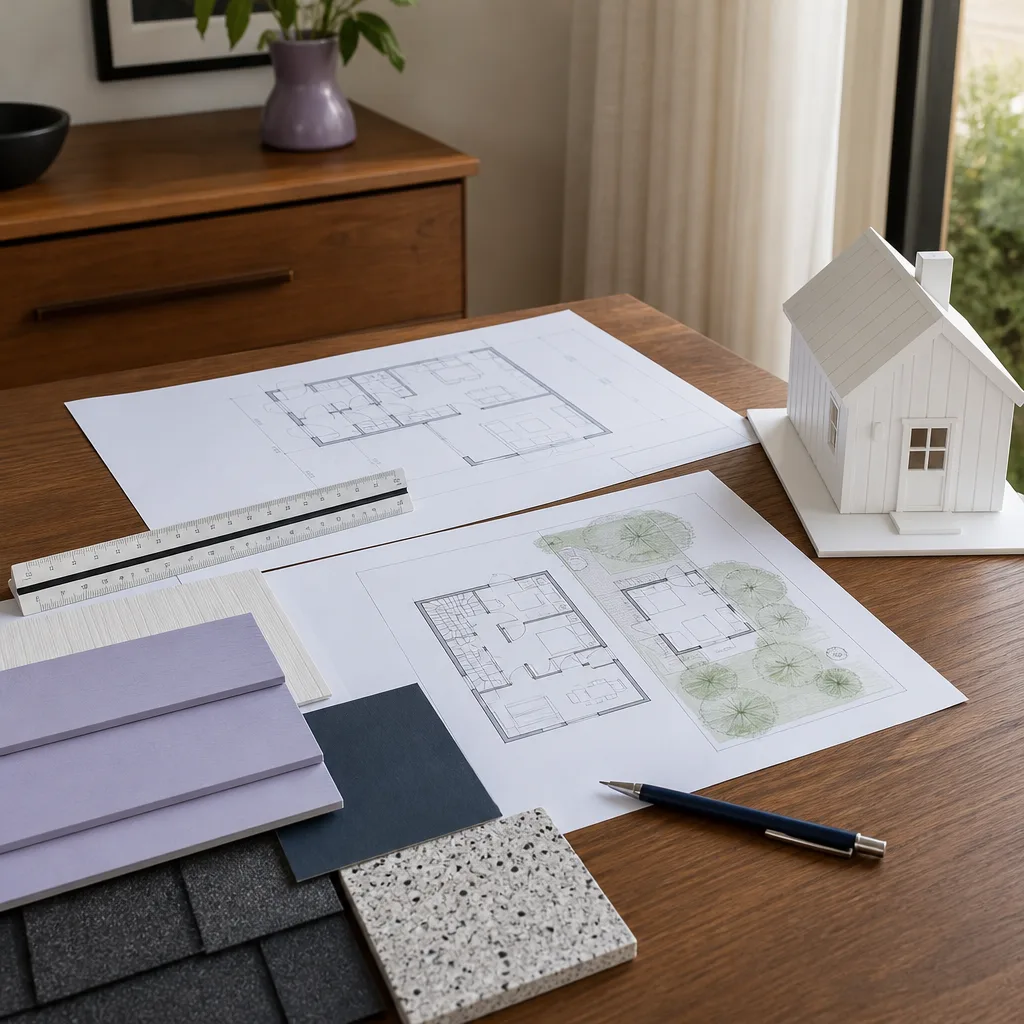
For a San Antonio ADU in the 600 to 800 square foot range, a full HardiePlank re-clad with new trim and the proper flashing generally lands between $12,000 and $18,000. A partial repair, like replacing failed boards on a single elevation or correcting flashing around two or three windows, typically runs $1,800 to $4,500. The range comes down to what’s underneath: if the existing housewrap is torn or the window nailing fins are compromised, the repair becomes more involved than just swapping boards. We write every estimate as a fixed price, not a time-and-materials guess. The labor, material, dump fee, and all flashing work are listed as line items before you sign anything, and the work is covered under our 365-Day Done Right Promise. That includes the free second visit if anything we touched turns out wrong.
Here’s what the line items typically look like on a mid-range HardiePlank replacement for a San Antonio ADU:
- Existing siding removal and disposal: $900 – $1,400
- New HardiePlank lap siding (ColorPlus, 600 – 800 sq ft wall area): $4,200 – $6,800
- HardieTrim corners, window, and door trim: $1,100 – $2,000
- Flashing, housewrap, and fasteners: $600 – $1,200
- Labor (install, shimming, fastener pattern compliance): $4,800 – $7,200
DIY or Call Us?
You can absolutely identify the problem yourself: take a photo of the failing area, measure the exposed board width on three adjacent courses, and check whether the fasteners show rust or chalk. That’s genuinely useful when you call us, because it lets us ballpark the scope before we dispatch someone. What you shouldn’t do is climb a ladder with a pry bar and start pulling boards. HardiePlank is cement-fiber composite. It’s heavy, brittle at the edges when improperly handled, and the boards below the one you’re removing are often load-bearing in the lap sequence. The silica dust from cutting Hardie without proper equipment is also a legitimate respiratory concern. The flashing errors that cause most San Antonio ADU failures happen at places that are hard to see from the ground, and getting them wrong a second time means paying twice. If you’re genuinely curious about what’s going on, call (430) 258-2928 and ask for a set of photos and a written scope first. That call doesn’t cost you anything.
FAQs
James Hardie siding and trim carry a 30-year limited product warranty, and the ColorPlus factory finish carries 15 years against peeling and chipping. In San Antonio’s climate, the material itself routinely lasts 30 to 40 years when installed with correct gaps, flashing, and fasteners. The first thing you’ll need to address is usually caulk at the butt joints around year 7 to 10, not the boards themselves. Call (430) 258-2928 if you want us to look at your specific elevations and give you a straight lifespan estimate based on what’s actually installed.
Yes, individual boards and trim pieces can be cut out and replaced when the surrounding area is structurally sound. We regularly do single-elevation repairs on ADUs in San Antonio where one wall faces the afternoon sun and failed years before the other three. The deciding factor is whether the flashing behind the failed board is still doing its job. If the water management layer is compromised, we’ll recommend replacing that section completely rather than patching the surface. A written quote is always free, and you’ll see exactly where we draw that line before any work begins.
For a full 600 – 800 sq ft ADU re-clad, expect 5 to 8 working days from tear-off to final touch-up, assuming the sheathing underneath is intact. If we find rotted sheathing, the schedule extends by a day or two while we cut it out and patch it. Partial repairs on a single elevation usually wrap up in 1 to 2 days. When we hand you the written quote, the schedule is on it, and you get real-time updates with photos as the work progresses so you never wonder what’s happening on your property while you’re at work.
We keep the most common San Antonio ADU profiles in stock at our local supplier yard: 8.25 in. ColorPlus HardiePlank in the standard exposures, HardieTrim in 1×4 and 1×6, and the starter and flashing accessories that go with them. Less common profiles or colors are ordered with a 3 to 5 day lead time. When we quote your project, we’ll tell you during that first conversation whether your material is on hand or needs to be pulled, so there’s no surprise delay written into the schedule quietly. Call (430) 258-2928 and we’ll check availability for your specific product line while you’re on the phone.
Written by Troy Eastman, Owner & Builder, Benson ADU San Antonio at Benson ADU San Antonio, serving San Antonio and nearby areas.