James Hardie Junior ADU Conversion: The San Antonio Owner’s Guide
We stock and install James Hardie-compatible siding, trim, and panel systems for junior ADU conversions across San Antonio, with typical installed pricing landing between $4,800 and $11,500 depending on square footage and exposure. Most owners discover a problem the same way: a hairline crack at a corner board, paint bubbling along the bottom edge of a HardiePanel, or water staining on interior drywall after a hard Texas rain. The fix is rarely a full re-side, but ignoring it turns a $600 trim replacement into a $6,000 structural repair faster than you’d think.
Here’s the thing about James Hardie products in South Texas: they’re engineered for fiber cement durability, but our climate punishes installation shortcuts harder than any spec sheet admits. San Antonio’s freeze-thaw cycles, 100-degree summers, and monsoon-season downpours expose bad flashing within 18 months. We see it constantly. If you’ve got a JADU conversion that’s showing its age, this page tells you exactly what to look for, what it costs to fix, and when to stop poking at it yourself.
Which James Hardie Models This Applies To
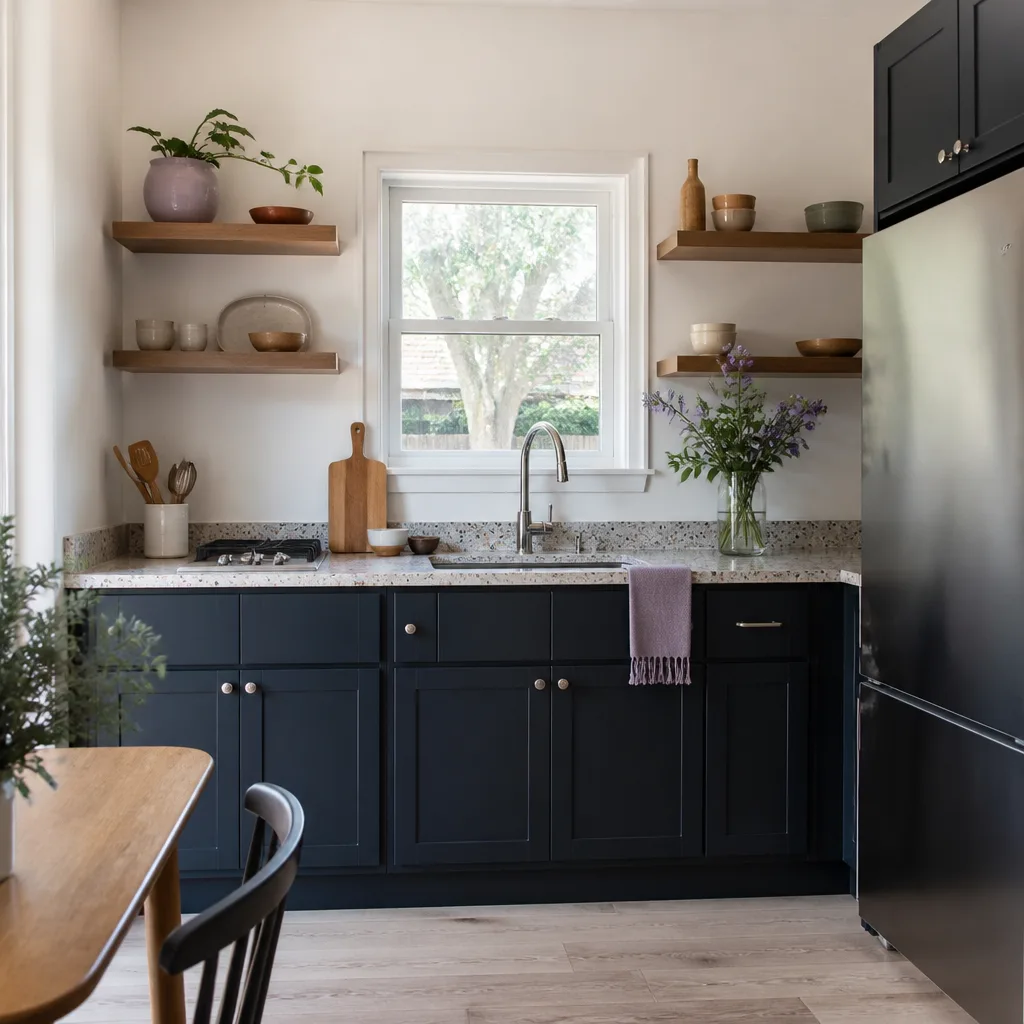
Junior ADU conversions in San Antonio typically use one of three James Hardie product families: HardiePlank lap siding (the 5.25-inch and 8.25-inch exposure profiles), HardiePanel vertical sheets (4×8, 4×9, and 4×10), or HardieTrim boards (4/4 and 5/4 thickness in smooth and cedar-texture finishes). Each has distinct fastening patterns, joint treatment requirements, and paint adhesion characteristics. If you don’t know which one is on your ADU, check the back of a loose piece or the unexposed edge near the foundation: HardiePlank carries embossed trade markings every few feet, while HardiePanel shows a grid pattern on the reverse side.
The compatibility gotcha most San Antonio homeowners miss: post-2018 HardiePlank uses a slightly different corner interlock geometry than pre-2018 stock. Mixing them on a repair creates a visible seam that opens up within two seasons. We keep both profiles on the truck and match before we quote. OEM HardieTrim is worth the upcharge for corners and window surrounds; aftermarket fiber cement trim from generic suppliers costs 15 to 20 percent less but lacks the same dimensional stability, and we’ve seen it cup badly on west-facing San Antonio walls. For lap siding field repairs, a quality aftermarket panel from a brand like Allura or Cemplank performs fine at a 10 to 12 percent savings, and we’ll tell you when it makes sense.
One more thing: Benson ADU San Antonio is an independent contractor. We’re not affiliated with James Hardie, but we install and repair their products daily, and we’ve been doing junior ADU work in San Antonio long enough to know which half-millimeter differences matter.
Signs Your James Hardie Junior ADU Conversion Is Failing
- Bottom-edge swelling or delamination. Fiber cement absorbs water when the factory-sealed edge is cut during installation and not re-primed. The bottom 3 to 4 inches of the board starts to look fuzzy or layered. This is the most common failure we see on San Antonio JADU conversions built between 2015 and 2020.
- Corner board cracks at the miter. HardieTrim moves at a different rate than the siding behind it. When the installer nails both too rigidly, the mitered corner cracks in the first big temperature swing. Hairline cracks in October become open gaps by March.
- Caulk separation around windows and doors. James Hardie recommends specific sealants with ±50% joint movement capability. Generic painter’s caulk hardens, loses elasticity, and pulls away, leaving a channel for wind-driven rain. On east-facing San Antonio walls, we see this in as little as two years.
- Paint peeling in sheets, not flakes. If the original coat was applied over Hardie’s factory primer without a proper scuff-and-wipe, adhesion fails from the primer outward. You’ll see large patches where paint comes off like a sunburn peel. This is a prep failure, not a paint failure.
- Interior baseboard staining on an exterior-adjacent wall. Water that gets behind siding eventually finds the sill plate. Staining, musty odor, or soft drywall along the bottom of a JADU’s exterior wall means the cladding system has already lost its water-management function.
Replacement Cost & What’s Included
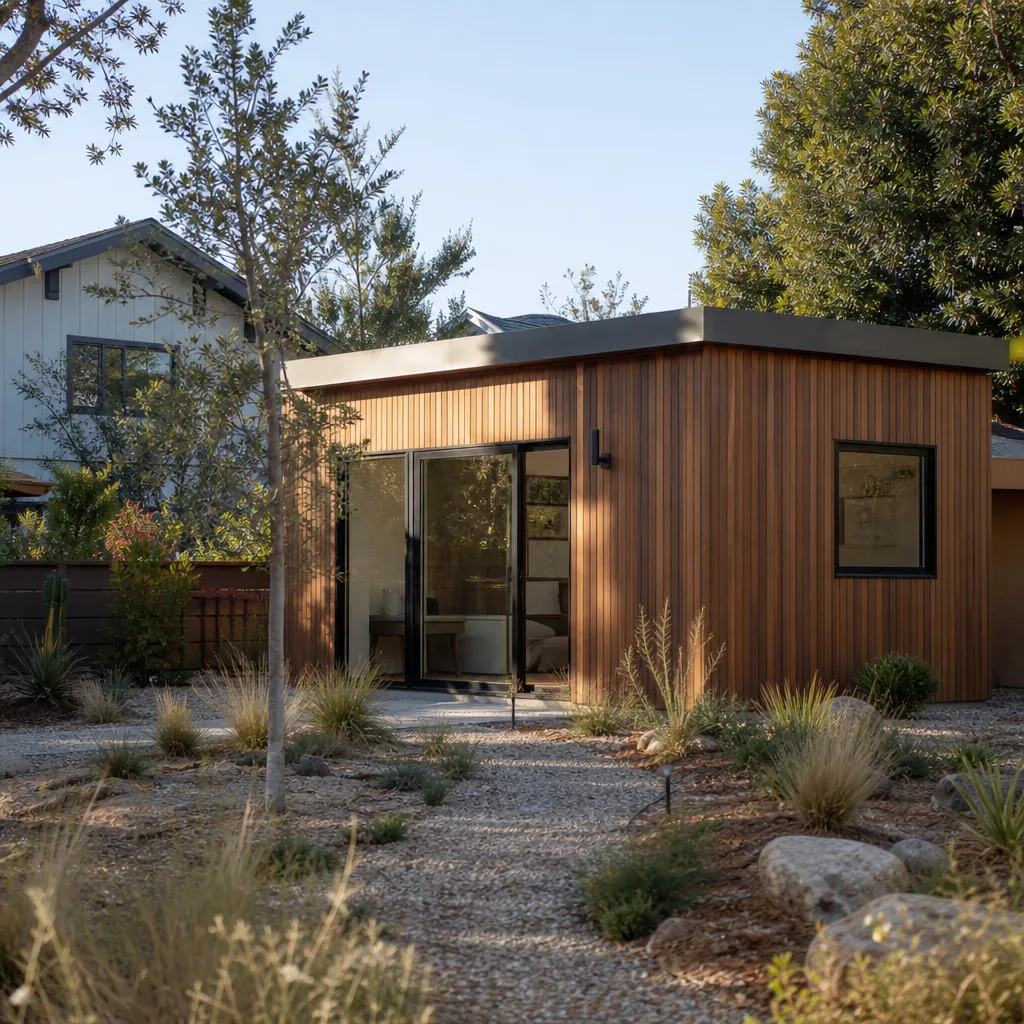
In San Antonio, you should expect to pay between $4,800 and $11,500 for a junior ADU conversion repair involving James Hardie products. A focused repair – say, replacing 80 to 120 square feet of HardiePlank, two corner trim boards, and re-caulking all penetrations – lands between $4,800 and $6,500. A more involved job with full HardiePanel re-siding on a 400-square-foot JADU, new trim throughout, and proper flashing replacement runs $8,000 to $11,500. The spread comes down to access, height, and how much rot remediation we uncover once the old cladding comes off.
Every quote from Benson ADU San Antonio is a written line-item number. You’ll see the part cost, the labor, the disposal, and the sealants separated out. The number goes on paper first. Everything else follows from there. Our work on James Hardie repairs carries a full one-year installation warranty under the 365-Day Done Right Promise, and we handle the permit if the work requires it. In many San Antonio-area jurisdictions, a straight siding repair on an existing structure doesn’t need a permit, but we tell you either way before we start.
DIY or Call Us?
Here’s the honest split. You can safely check for loose boards, caulk failure, and visible cracks from the ground. You can also take photos and send them to us for a rough read before anyone drives out. What you should not do is pull a damaged HardiePlank off your JADU on a ladder and try to slap a new one in. Fiber cement is heavy – a 12-foot HardiePlank weighs over 13 pounds – and cutting it requires a diamond blade and proper dust control, not a circular saw with a framing blade. Silica dust from cutting fiber cement is a respiratory hazard. Wrong fasteners crack the board. Missed flashing rots the wall behind it. We’ve fixed enough homeowner attempts to say this plainly: the material cost savings of DIY evaporate the first time you break a board or blow a corner joint.
If you’re in San Antonio and want a real number, call us at (430) 258-2928. We’ll talk through what you’re seeing, give you a ballpark over the phone, and put the written price in front of you before any work starts.
FAQs
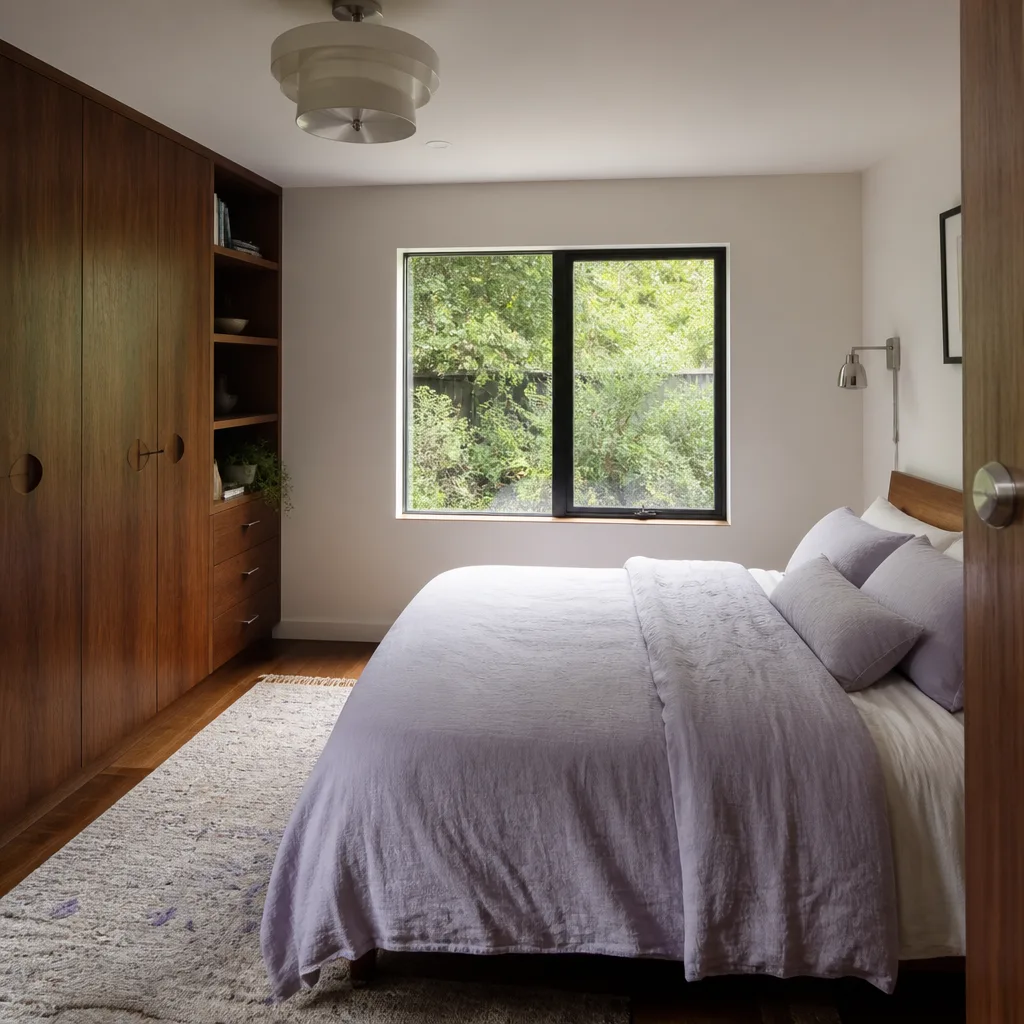
Expect 30 to 40 years from properly installed James Hardie products in the San Antonio climate if the caulking is maintained every 5 to 7 years. Poor installation kills it in 8 to 12 years, and most failures we see are installation-related, not material-related. HardiePlank itself rarely fails; the systems around it do.
A hairline crack under 1/16 inch can be routed, caulked with a high-elasticity sealant, and repainted for a service life of 5 to 8 years. Anything wider, or any crack that runs through a miter joint, needs the board replaced. Patching a structural corner trim crack is throwing good money after bad. Call (430) 258-2928 and describe what you’re seeing; we’ll help you decide without charging you for the advice.
Focused repairs with one or two technicians take one to two full days, including cleanup and disposal. A full JADU re-side runs three to five days depending on weather and scope. We schedule the work, tell you who’ll be on site, and send before-and-after photos when we’re done.
We keep the most common San Antonio profiles on hand: 5.25-inch HardiePlank, 4×8 HardiePanel, and 4/4 HardieTrim in smooth finish. Specialty profiles, cedar textures, and 8.25-inch exposures are ordered with a 3 to 7 day lead time. We also work with Abodu, Cover, and Dvele systems, and can source their matching cladding packs when a JADU was originally built as a prefab unit.
Written by Troy Eastman, Owner & Builder, Benson ADU San Antonio at Benson ADU San Antonio, serving San Antonio and nearby areas.