Plant Prefab Site Prep & Utilities: The San Antonio Owner’s Guide
We stock and install Plant Prefab-compatible site prep and utility connections across San Antonio, with most utility stub-outs and foundation prep work running $4,500 to $18,000 installed depending on your lot, soil conditions, and how far your utility lines need to travel. If you’ve got a Plant Prefab unit scheduled for delivery and the site isn’t ready, or you’ve discovered your existing prep work wasn’t done to spec, we can typically dispatch a crew within a few days to assess and correct it. Most San Antonio owners discover they have a problem when their delivery gets flagged, their utility trench fails inspection, or the pad settles unevenly after the first heavy rain.
We are an independent contractor, not affiliated with Plant Prefab. We build with their systems regularly, which means we know their site requirements cold.
Which Plant Prefab Models This Applies To

Plant Prefab’s current lineup includes the Accessory Dwelling Unit (ADU) series, the LivingHome series (ranging from roughly 400 to 1,800+ square feet), and their multi-family configurations. Every one of them requires a properly prepared site before the modules arrive: a level pad or foundation, utility laterals stubbed to the correct locations, and drainage that moves water away from the footprint. The utility specs vary by model. Some smaller ADU units run 100-amp service, while larger LivingHome models need 200-amp panels. That’s a big difference in trenching and conduit work, and it’s the kind of thing that trips up owners who pull specs from a different model line.
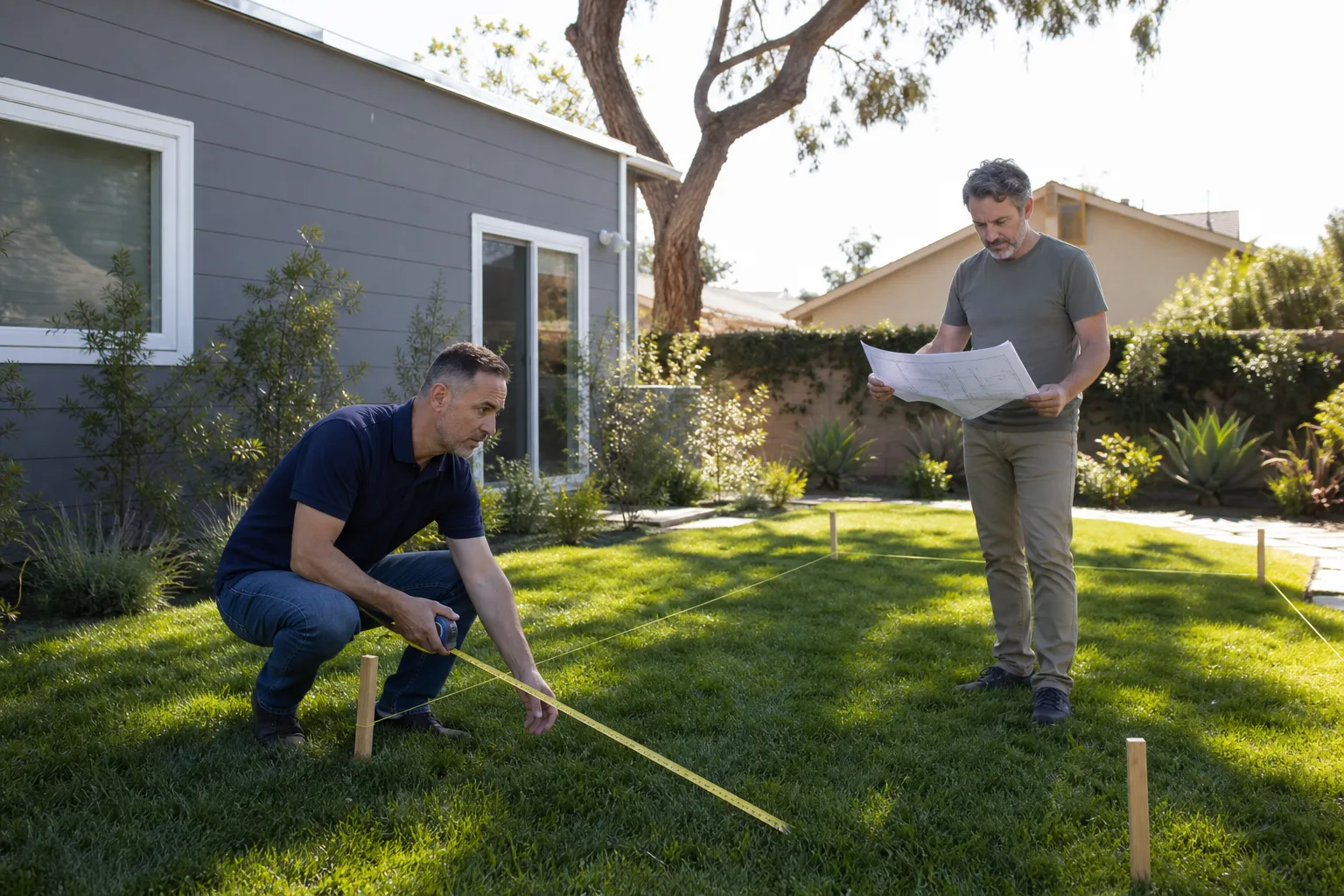
How to identify what you need: check your Plant Prefab purchase documents for the site plan and utility schedule. The utility schedule is a one-page drawing that shows exactly where water, sewer, and electrical connections need to land. If you can’t find it, Plant Prefab can reissue it. The key measurement is your utility lateral locations relative to the corners of the pad. Get that right and the rest follows. For most Plant Prefab projects in San Antonio, we recommend running 2-inch electrical conduit at a minimum, even if your current model calls for smaller. It’s a few hundred dollars more in material and saves thousands if you ever upgrade your electrical service. Plant Prefab’s own engineering team has signed off on this for several of our local projects.
OEM site prep isn’t a thing Plant Prefab sells directly. They provide the specs; you source the materials. What matters is that the concrete mix, rebar schedule, and utility conduit match their structural requirements. For aftermarket components like meter boxes, disconnects, and PVC conduit, name-brand products from Schneider Electric, Eaton, and J-M Manufacturing meet or exceed Plant Prefab’s specifications. We stock those brands on our trucks.
Signs Your Plant Prefab Site Prep & Utilities Is Failing
- Pad edges are cracking or spalling within the first year. This usually points to a concrete mix that didn’t meet the 3,000 PSI minimum Plant Prefab specifies, or slab edges that were formed without proper keyways. In San Antonio’s clay-heavy soils, slab edge cracking happens fast if the pad wasn’t reinforced for expansive soil movement.
- Water ponding under or around the pad after rain. Our heavy spring and fall rains expose grading problems quickly. If water stands within 5 feet of the pad, your drainage plan wasn’t done right. Plant Prefab requires positive drainage away from the foundation, and standing water against a module base will cause moisture problems inside the unit within months.
- Electrical conduit is exposed, cracked, or filled with water. PVC conduit that wasn’t glued properly or buried to the required 18-inch minimum depth will fail in San Antonio. If you can see conduit above grade where it should be buried, or if water is seeping into the pull boxes, your electrical inspection will get flagged.
- The utility lateral doesn’t match your Plant Prefab utility schedule. This shows up when the electrical panel doesn’t line up with the module’s main feed location, or the sewer lateral is 3 feet off spec. Moving a sewer lateral after the pad is poured means cutting concrete. That’s the most expensive fix on this list.
- Backfill around the pad is settling or washing out. Loose backfill that wasn’t compacted in lifts means your pad edges are losing lateral support. In San Antonio’s clay soil, which expands when wet and contracts when dry, uncompacted backfill turns into voids that let water reach the slab underside.
Replacement Cost & What’s Included
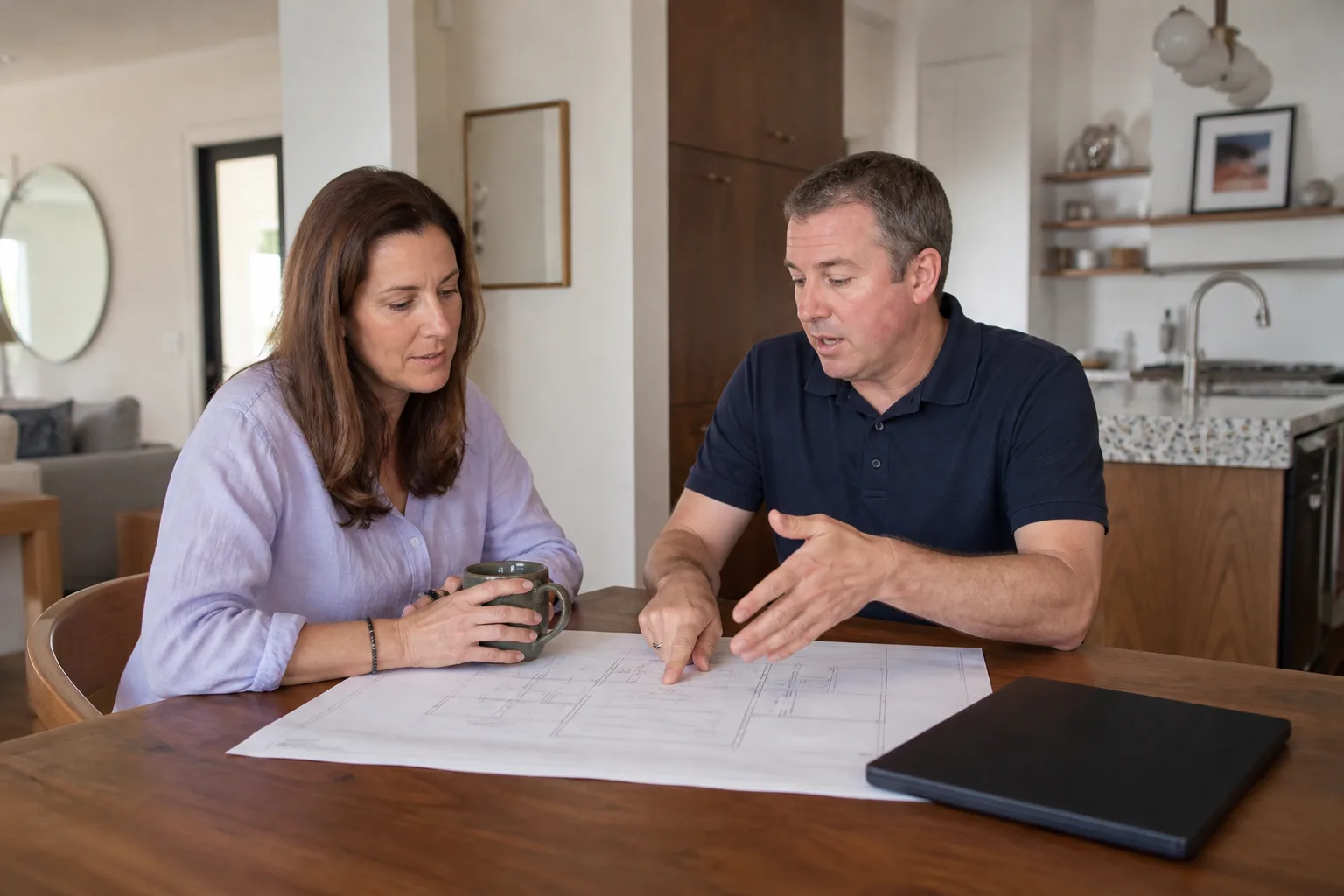
For Plant Prefab site prep and utility corrections in San Antonio, here’s where the money goes:
- Pad repair or full re-pour: $8,000 to $15,000 for a full pad under a smaller ADU, less if only a section needs cutting and re-pouring.
- Utility trenching and lateral installation: $1,800 to $5,000 depending on distance from the street tap and whether we’re pulling new wire or just fixing conduit.
- Drainage correction and grading: $1,500 to $4,000 for regrading, swales, and surface drains.
- Electrical panel and conduit upgrades (100A to 200A): $2,000 to $4,500 including materials and CPS Energy coordination.
You get a written price before any work starts. No change orders that surprise you after we open up the ground. If we open a trench and find something unexpected (old septic lines, buried debris, rock), we stop, show you photos, and put the revised number in writing before we proceed. That’s how Troy Eastman runs this shop. The number goes on paper first. Everything else follows from there.
Every site prep and utility job carries our 365-Day Done Right Promise: if the pad settles, the conduit fails, or the drainage doesn’t work within a full year, we come back and make it right at no charge. And we’re part of the Relay Home Co. family, founded in 2006, which backs every project with a written guarantee.
DIY or Call Us?
You can check a few things yourself: walk the pad after rain and look for ponding, check that conduit is buried and not full of water, and compare the utility locations against your Plant Prefab utility schedule. Those observations help you understand what’s wrong and give us useful information on the call.
But fixing site prep and utilities is not a weekend project. Excavation near gas and sewer lines is genuinely dangerous. Hitting a gas line while trenching can kill someone. Electrical work on a 200-amp service must be done by a licensed electrician and inspected by CPS Energy. And re-pouring a pad that doesn’t meet spec means paying for demolition twice. If your prep work is failing, the cost of a fix now is almost always less than the cost of a failed inspection or a damaged module after delivery. Call (430) 258-2928 and we’ll come look at it. The assessment visit comes with a written plan and a price.
FAQs
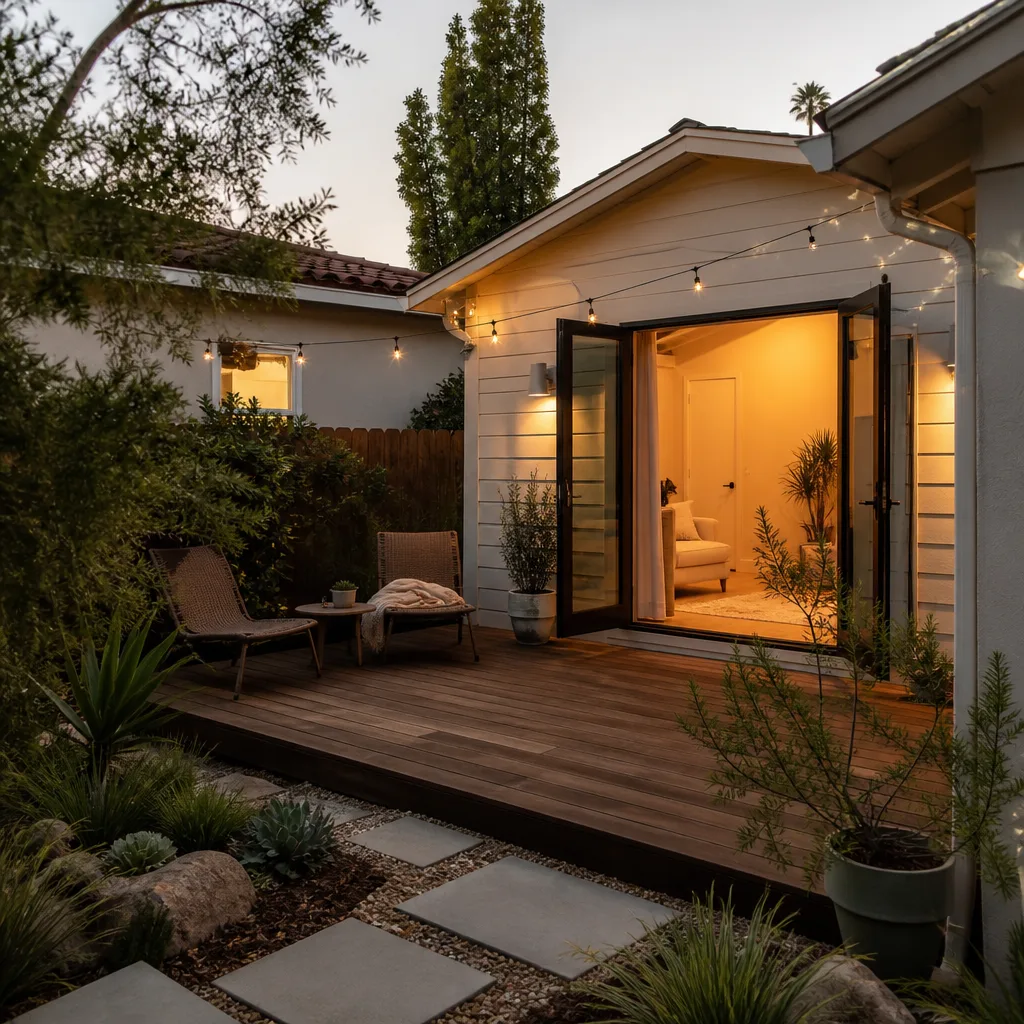
A properly built concrete pad with correct drainage should last 50-plus years in San Antonio’s climate, but the utility connections and drainage features need periodic inspection, especially after our wet spring seasons. The weak points are usually conduit joints and backfill compaction, not the slab itself.
Yes, if the cracking is isolated to the edges or corners and the slab is otherwise structurally sound, we can cut out and re-pour sections. If the cracking runs through the middle or the pad has settled unevenly, a partial repair won’t hold and full replacement is the honest answer. We’ll tell you which one you have after we inspect it. Call (430) 258-2928 to schedule an assessment.
Most utility corrections and pad repairs take 5 to 10 working days from start to inspection-ready. Full pad replacements for larger Plant Prefab units can run 3 to 4 weeks including concrete cure time, which can’t be rushed.
We keep standard conduit, pull boxes, meter bases, disconnects, and panel components on our trucks and in our San Antonio yard. For model-specific components tied to your Plant Prefab unit, we coordinate directly with their engineering team to confirm specs before we install anything.
Written by Troy Eastman, Owner & Builder, Benson ADU San Antonio at Benson ADU San Antonio, serving San Antonio and nearby areas.