Last updated October 15, 2026
DIY vs Professional ADU: The San Antonio Homeowner’s Decision Guide
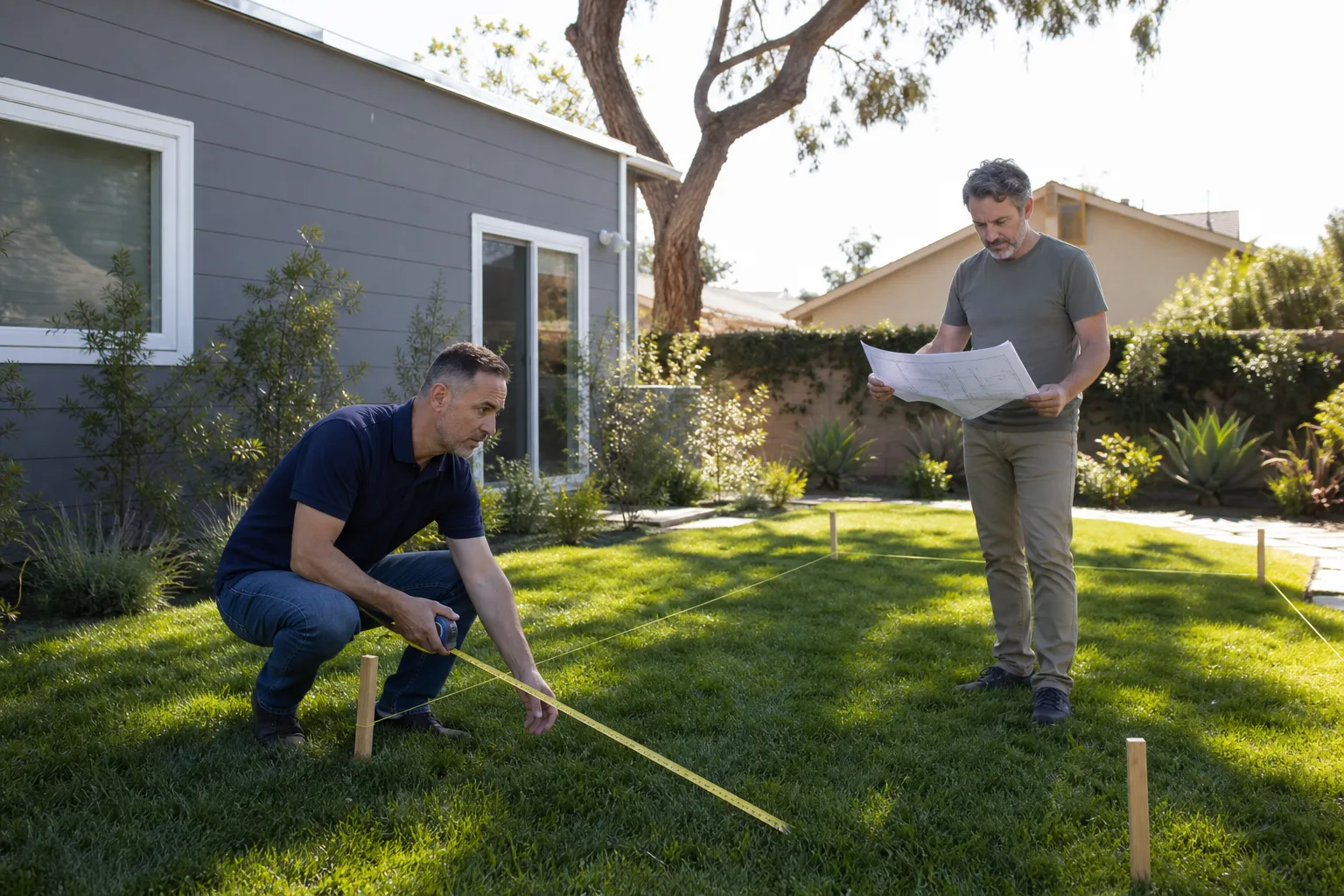
Most San Antonio homeowners think the DIY ADU conversation starts with money. It doesn’t. It starts with a hard legal wall: you cannot legally owner-build a permitted detached dwelling unit in Bexar County if you plan to rent it out, insure it, or sell the property cleanly down the road. Texas Insurance Code and Bexar County permitting rules both require a licensed contractor of record on any new residential dwelling unit. The “I’ll just do it myself” plan that works beautifully for a backyard fence or a deck rebuild doesn’t apply here. This guide draws the line between what Texas law lets you self-perform, what it outright forbids, and where a middle path like prefab actually saves you money without putting your property at risk.
Quick Answer
Full DIY is not a legal option for a permitted rental or insured ADU in San Antonio. A licensed contractor of record is required on the permit for any new dwelling unit in Bexar County. You can self-perform a narrow set of finish tasks (painting, landscaping, some trim work) on a professionally permitted project, but electrical, plumbing, HVAC, structural, and foundation work all require licensed trades. The real decision isn’t DIY vs. pro. It’s how much owner labor you fold into a professionally permitted project without triggering warranty, insurance, or title problems.
Table of Contents
- The Legal Reality: Why Full DIY ADU Construction Is Off the Table in San Antonio
- What Texas Law Actually Lets You Self-Perform on a Permitted ADU
- The Real Cost of an Unpermitted ADU in Bexar County
- Prefab ADUs: The Middle Path Between Full DIY and Full Custom Build
- Owner-Supplied Materials: How to Recapture Savings Without Breaking the Permit
- San Antonio Clay Soils: Why Foundation DIY Errors Cost More Here Than Anywhere in Texas
- Common Mistakes to Avoid
- When to Call a Professional
- Frequently Asked Questions
- The Bottom Line
The Legal Reality: Why Full DIY ADU Construction Is Off the Table in San Antonio
Here’s the sentence that changes every San Antonio ADU planning conversation: Bexar County requires a licensed contractor of record on the permit application for any new detached dwelling unit. That includes ADUs, guest houses, casitas, garage apartments, and manufactured or prefab units placed on a permanent foundation. The contractor of record is not optional paperwork. It’s the entity that carries legal liability for code compliance, structural integrity, and worker safety on the job. A homeowner can pull an owner-builder permit for certain residential projects in Texas, but not for a new rental dwelling unit, and not for a unit that will be separately insured or mortgaged.
Why does this matter in practice? Because if you start a “stealth” ADU conversion in San Antonio without a permit, or if you misrepresent owner labor to the city, the consequences don’t stay hidden. They surface at the worst possible moment: when you try to sell the house, when a tenant reports a code issue, when an insurance adjuster inspects the property after a claim, or when a neighbor calls 311 about construction noise. At that point, you’re not negotiating with a contractor. You’re negotiating with a building official who has the authority to issue a stop-work order, a correction notice, or in extreme cases, a demolition order for work that can’t be brought into code compliance.
We’ve walked into more than one San Antonio backyard where the homeowner had already poured a slab, framed walls, or roughed in electrical based on YouTube tutorials and a helpful uncle. In every one of those cases, the fix cost more than doing it right the first time would have. Sometimes double. The legal line is not blurry here. If the unit will be rented, insured as a dwelling, or sold with the property, a licensed pro has to be on the permit.
For a deeper look at how the professional pathway works in San Antonio, see our ADU Builders in San Antonio page, which covers the complete process from permit to final inspection.
What Texas Law Actually Lets You Self-Perform on a Permitted ADU
Before you abandon the idea of saving money with your own labor, know this: you can legally self-perform a meaningful list of tasks on a professionally permitted ADU project in San Antonio. The line is drawn by trade license law, not by the contractor’s preference. Licensed trades (electrical, plumbing, HVAC, structural framing in some cases, and foundation work) must be performed by licensed professionals. But a homeowner can legally handle finish work that doesn’t require a trade license or a permit inspection.
Here’s the breakdown, based on how San Antonio’s building officials and Texas trade license law interpret it:
Tasks a homeowner can legally self-perform on a permitted ADU
- Interior painting – including priming, trim painting, and accent walls. No license required.
- Landscaping and hardscaping – drainage swales, gravel paths, planting beds, and sod. No license required unless you’re tying into the sanitary sewer line.
- Finish carpentry – installing baseboards, door casing, closet shelving, and non-structural trim. Allowed.
- Cabinet installation – as long as plumbing connections are done by a licensed plumber, you can hang upper and lower cabinets, install hardware, and mount countertops (unless the countertop requires structural support modifications).
- Flooring – tile, LVP, hardwood, and carpet installation. No license needed for the install itself.
- Minor drywall work – patching, texturing, and finishing seams. Hanging large sheets on new walls is a gray area; finishing is not.
- Light fixture installation – if you’re replacing a fixture on an existing junction box, it’s allowed. Running new wire is not.
- Demolition of non-structural elements – removing old cabinets, flooring, and drywall inside an existing space. Structural demolition requires a permit and often a licensed contractor.
Tasks that require a licensed trade in San Antonio
- Electrical rough-in and panel work – running new circuits, adding a subpanel, wiring outlets and switches. Requires a Texas-licensed electrician and a separate electrical permit.
- Plumbing rough-in and waste lines – tying into the sanitary sewer, running supply lines, installing a water heater. Licensed plumber required.
- HVAC installation – mini-splits, ductwork, and ventilation. Requires a licensed HVAC contractor and often a mechanical permit.
- Structural framing – load-bearing walls, roof trusses, and shear walls. The permit application requires sealed drawings and a licensed framing contractor in most cases.
- Foundation work – slab pours, pier drilling, and post-tension cable work. Texas law requires licensed professionals for any foundation work on a dwelling unit.
- Gas line installation – any natural gas or propane line work.
- Roofing – roof replacements and roof framing. Requires a permit and licensed roofer when the structure is a dwelling unit.
The takeaway: if you want to put sweat equity into your San Antonio ADU, you can absolutely do it. You just can’t do it on the systems that keep the building standing, powered, plumbed, and safe. The smart play is to tell your contractor upfront which self-perform tasks you want to take on, get it written into the contract scope, and schedule your work around the licensed trade inspections. That keeps the permit clean and your savings real.
The Real Cost of an Unpermitted ADU in Bexar County
Ask any San Antonio homeowner who’s tried to sell a house with an unpermitted backyard conversion, and you’ll hear the same story. The ADU that “saved” them $40,000 in contractor fees ended up costing $80,000 in price reductions, legal fees, and remediation. Here’s what an unpermitted ADU actually triggers in Bexar County:
1. Title encumbrances that surface at sale
When you list a property for sale in Texas, the seller’s disclosure form asks specifically about unpermitted work. You cannot omit it without committing fraud. Buyers and their lenders will run a permit history check on the property. If the ADU doesn’t appear in the county records, financing falls apart for any buyer using a conventional mortgage. You’re suddenly selling to cash-only buyers who expect a deep discount. In our experience in San Antonio, an unpermitted ADU knocks 10 to 15 percent off the sales price, and it adds months to the closing timeline.
2. Homeowner’s insurance voidance
Here’s a nightmare scenario we’ve seen play out: a homeowner builds an unpermitted ADU, rents it out, and the tenant’s space heater starts a fire. The insurance company investigates, discovers the unpermitted unit, and denies the entire claim, including damage to the primary house. Why? Because the policy was written for a single-family dwelling, and the unpermitted second unit is considered a material change to the risk profile that was never disclosed. You’re now personally liable for the damage, the tenant’s injuries, and the cost of rebuilding. That’s not a hypothetical. It happens.
3. Forced demolition orders
Bexar County building officials have the authority to issue a demolition order for unpermitted structures that can’t be brought into compliance. This is rare, but it happens in San Antonio when neighbors file repeated complaints, or when an inspector discovers structurally unsafe work during an unrelated inspection. The demolition is at your expense. The cost of removing a 600-square-foot unpermitted ADU and restoring the site is typically $15,000 to $30,000, paid out of pocket.
4. Criminal and civil liability
Renting out an unpermitted dwelling unit is a code violation in San Antonio. If a tenant is injured, the absence of a permit is evidence of negligence. A personal injury attorney will use it to establish that you knowingly rented an illegal unit. Your homeowner’s insurance won’t cover the defense, because the policy excludes unpermitted rental activity. You’re personally exposed to damages that could exceed the value of the entire property.
The math is simple: the money you “save” by skipping permits is borrowed against your future equity, your insurance coverage, and your legal safety. For A complete breakdown of how permitted ADU construction works in San Antonio, visit our ADU Builders in San Antonio guide.
Prefab ADUs: The Middle Path Between Full DIY and Full Custom Build
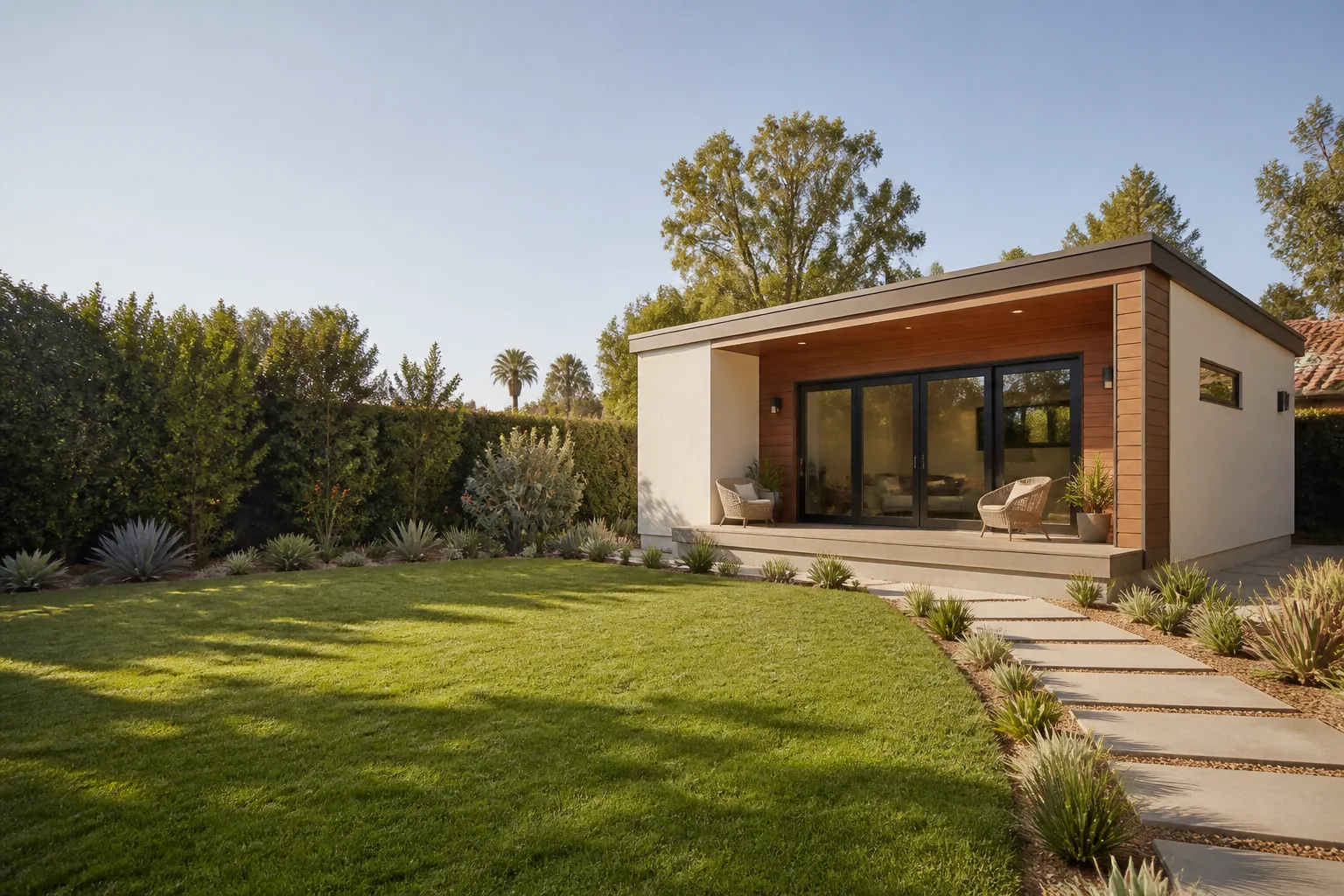
If the DIY route is legally closed and full custom site-built construction feels expensive, prefab is the middle path that more San Antonio homeowners are choosing. A prefab ADU is a dwelling unit built in a factory, delivered to your property on a truck, and craned or rolled onto a prepared foundation. The factory handles the structural framing, exterior cladding, windows, doors, and often the interior finishes. What remains on-site is the foundation, utility connections, and finishing details.
Here’s why prefab matters specifically in the DIY conversation: prefab removes the temptation to self-build the parts of the ADU that are most likely to fail in San Antonio’s climate and soils. When you buy a unit from Abodu, Cover, or Mighty Buildings, the factory has already done the structural engineering, the wall assembly, the window flashing, and the roof waterproofing under controlled conditions. Those are exactly the tasks that go wrong when a homeowner tries to frame an ADU in a San Antonio backyard during a humid July afternoon.
But prefab is not a magic bullet. The unit still needs:
- A permitted foundation – engineered for San Antonio’s expansive clay soils, with the right pier depth and slab reinforcement.
- Licensed utility connections – electrical service, water supply, and sanitary sewer hookups performed by licensed trades.
- Bexar County permit approval – the factory-built unit must be approved by the county’s building department, which reviews the factory certifications and the site plan.
- Site preparation – grading, drainage, and access for the delivery truck and crane.
So the prefab middle path still requires a licensed San Antonio contractor on the permit. What it changes is how much of the construction risk moves off-site. You’re not paying a framing crew to build walls in the Texas heat. You’re paying a factory to build them under quality-controlled conditions, and you’re paying a local contractor to prepare the site, set the unit, and handle the licensed connections. The savings versus a fully site-built ADU in San Antonio typically runs 10 to 20 percent, depending on the unit and the site conditions.
Owner-Supplied Materials: How to Recapture Savings Without Breaking the Permit
If you want to save real money on a professionally built ADU in San Antonio without touching a single tool, negotiate an owner-supplied materials clause into your contract. This is a standard provision in many custom home and ADU contracts, and it’s a legitimate way to cut costs if you’re willing to do the legwork of sourcing and delivering materials yourself.
Here’s how it works:
- You and your contractor agree on the materials list – down to the brand, model number, and quantity. This is critical. A vague “owner supplies flooring” clause leads to delays and disputes when the wrong material arrives on the wrong day.
- You purchase the materials directly – using the contractor’s trade account if they’ll allow it, or your own cash or credit card. You get the receipt, and you own the material.
- You deliver the materials to the site – or arrange for delivery. The contractor is not responsible for storing, moving, or protecting your materials unless that’s written into the contract.
- The contractor installs the materials – and this is where the warranty picture gets nuanced.
The savings can be significant. On a San Antonio ADU project, materials typically represent 35 to 50 percent of the total cost. If you can source flooring, cabinets, tile, light fixtures, plumbing fixtures, and appliances at 15 to 25 percent below retail by buying direct from distributors or during sales, you’re saving $5,000 to $15,000 on a $150,000 project.
But there’s a catch: most contractors will not warrant owner-supplied materials. If the tile you bought cracks, if the cabinet doors warp, if the toilet leaks, that’s on you. The contractor warrants the installation workmanship, not the material itself. And if an owner-supplied material fails and requires reinstallation, you’re paying for the reinstall labor. So the smart play is to self-supply only materials where the failure risk is low (flooring, trim, paint, door hardware) and let the contractor supply and warrant the systems that matter (electrical panel, water heater, HVAC, windows, roofing).
We’ve done owner-supplied contracts on San Antonio ADU projects where the homeowner supplied everything from tile to door handles. It works when the materials list is exact, the delivery schedule is respected, and both parties understand that the owner owns the material risk. For an overview of how we structure these agreements, see our Home Addition Contractor in San Antonio page.
San Antonio Clay Soils: Why Foundation DIY Errors Cost More Here Than Anywhere in Texas
San Antonio sits on a geological phenomenon that most of the country doesn’t have to think about: expansive clay soils. The soil under your backyard swells when it rains and shrinks when it dries. A single cubic foot of San Antonio clay can expand by up to 10 percent in volume between dry and saturated conditions. That movement exerts enormous pressure on foundations, and it’s the primary reason San Antonio has one of the highest rates of foundation repair in Texas.
Here’s what that means for anyone tempted to DIY an ADU foundation:
- Slab thickness and reinforcement are not guesses. A San Antonio ADU slab needs engineered post-tension cables or steel reinforcement designed for the specific soil conditions on your lot. A generic “4-inch slab with rebar” from a DIY video will crack within two to three years as the clay expands and contracts beneath it.
- Pier depth matters more than pier width. If your site has deeper clay layers, piers need to extend deeper to reach stable soil or bedrock. Driving shallow piers into expansive clay is worse than no piers at all, because the piers will heave unevenly and transfer differential movement to the slab.
- Drainage is a foundation issue. Water that ponds near a slab during San Antonio’s heavy spring and fall rains gets absorbed by the clay, which expands and pushes upward. A properly engineered ADU site includes grading, gutters, and sometimes French drains to keep water away from the foundation perimeter.
- Tree roots are a bigger problem here. San Antonio’s live oaks and mesquite trees have aggressive root systems that extract moisture from the soil, causing localized shrinkage. An ADU placed too close to a mature tree will see differential settlement as the roots pull water from one side of the foundation.
The remediation cost for a failed ADU foundation in San Antonio is the highest of any foundation type in Texas. We’ve seen cracks that require mudjacking runs $3,000 to $8,000. Full foundation replacement on a detached ADU runs $25,000 to $50,000. And here’s the kicker: foundation failures are not covered by standard homeowner’s insurance. They’re classified as earth movement, which is excluded on virtually every Texas policy. So the DIY foundation “savings” of $10,000 to $15,000 carries a tail risk of a $50,000 uninsured loss. That’s the opposite of saving money.
Common Mistakes to Avoid
- Planning an ADU around full DIY because “my uncle can help.” Even if your uncle is a retired electrician, he can’t legally pull the electrical permit unless he’s a licensed Texas contractor with current insurance. The permit requires a contractor of record, not just a skilled relative.
- Skipping the permit fee and hoping no one notices. In San Antonio, neighbors notice. Construction noise, delivery trucks, and concrete pumps are not subtle. One 311 call triggers an inspector visit, and an unpermitted ADU becomes a code enforcement case.
- Borrowing a prefab unit design without engineering it for San Antonio soils. A unit approved for a sandy soil site in Florida or Arizona may not meet Bexar County’s foundation requirements. The foundation design is always site-specific, not factory-specified.
- Self-performing plumbing and electrical on a “rental” ADU. Texas law doesn’t distinguish between your own use and tenant use when it comes to licensed trades. If you rent the unit and something fails, you’re personally liable for damages and your insurance won’t cover unlicensed work.
- Buying a cheap “tiny home” shell and calling it an ADU. Most tiny home shells sold online are not code-compliant dwellings for Bexar County. They lack the insulation, egress windows, and mechanical systems required for a permitted residential unit. What you save on the shell, you spend on retrofits, and sometimes the shell can’t be brought into compliance at all.
- Not accounting for San Antonio’s setback and easement rules. San Antonio has specific setback requirements for detached structures from property lines, and many lots have utility easements that restrict where you can build. An ADU placed in the wrong spot will trigger a correction order even if the construction is flawless.
- Assuming owner-builder permits are allowed for any residential project. Texas allows owner-builder permits for some single-family primary residence work, but not for a separate rental unit, and not for a unit that will be sold as a separate dwelling. The legal distinction catches a lot of San Antonio homeowners off guard.
When to Call a Professional
If any of these situations describe your San Antonio ADU project, a licensed contractor is not optional, it’s legally required: you plan to rent the unit out (now or later), you need a new electrical panel or subpanel, you’re tying into the city sewer or water main, you’re building on expansive clay soil that needs an engineered foundation, or you want the ADU to add value to your property at sale rather than subtract from it.
If you’re in the research phase and want real numbers for your specific San Antonio property, Benson ADU San Antonio home is a good starting point. Or jump to our ADU Builders in San Antonio page to see how a typical permitted project is scoped and priced. We offer free estimates for ADUs, home additions, and room additions. Call (430) 258-2928 to schedule yours. No pressure, just a written price before any work starts.
Frequently Asked Questions
No, not if you plan to rent it out, insure it as a dwelling, or sell the property with the ADU as a permitted structure. Bexar County requires a licensed contractor of record on the permit for any new dwelling unit. You can self-perform finish work like painting and trim on a professionally permitted project, but the structural, electrical, plumbing, and HVAC work must be done by licensed trades. Call (430) 258-2928 for a free estimate if you want the exact scope for your property.
A permitted ADU in San Antonio typically costs between $180 and $350 per square foot, depending on whether you choose a prefab unit from a brand like Abodu or Cover, a custom site-built design, or a garage conversion. A 600-square-foot ADU runs roughly $110,000 to $210,000 all-in, including permits, site work, foundation, and utility connections. Prefab units tend to land on the lower end of that range, but the foundation and site work costs are the same regardless of construction method. Call (430) 258-2928 for a written price on your specific project.
You create a title encumbrance that surfaces at sale, you void your homeowner’s insurance for any claim related to the unpermitted unit, and you expose yourself to fines, code enforcement actions, and in extreme cases, demolition orders. You also become personally liable for tenant injuries in an unpermitted rental unit, with no insurance protection. The cost to resolve an unpermitted ADU in San Antonio typically exceeds what the permit and licensed contractor would have cost in the first place.
Neither lets you self-perform licensed trade work. A prefab ADU from a brand like Cover or Mighty Buildings arrives with the structure and finishes factory-built, which removes the need for on-site framing, drywall, and exterior cladding. What remains on-site is the foundation, utility hookups, and site preparation, all of which require licensed professionals in Bexar County. A site-built ADU requires the full construction sequence on your property, which gives you more owner-supplied materials opportunities but also more construction risk.
Yes, most ADU contractors in San Antonio will negotiate an owner-supplied materials clause for specific items like flooring, light fixtures, tile, and door hardware. The contract must specify exact brand, model, quantity, and delivery schedule. You save money by sourcing these items yourself, but you also assume the warranty risk for those materials. The contractor warrants installation workmanship, not the owner-supplied product. Call (430) 258-2928 to discuss which materials make sense to self-supply on your project.
San Antonio’s expansive clay soil moves significantly between wet and dry seasons, which requires engineered foundations with deeper piers, more steel reinforcement, and careful drainage design. A foundation designed for Houston’s sandy soils or Dallas’s limestone will fail in San Antonio’s clay. The engineering and materials cost is higher, but it’s cheaper than the $25,000 to $50,000 cost of replacing a failed foundation that was under-engineered for the local soil conditions.
The Bottom Line
The DIY vs. professional ADU decision in San Antonio is not really a decision at all. Full DIY is legally closed for permitted rental or insured dwelling units. What remains open is how much of the finish work you self-perform, which materials you source yourself, and whether you choose a prefab unit from a factory like Abodu or a site-built custom design. The smart San Antonio homeowner treats the ADU like a small real estate development project, not a backyard weekend build. Get the permit, get the licensed contractor on record, and fold your sweat equity into the 10 to 15 percent of the project where it’s legal and safe. At Benson ADU San Antonio home, we’ve seen what happens when homeowners skip these lines, and we’ve also seen how clean a project goes when the scope is clear, the price is in writing, and every trade is licensed. For the complete picture on what a permitted ADU build looks like in San Antonio, start with our ADU Builders in San Antonio page. If you’re considering a larger project, our Home Addition Contractor in San Antonio and Room Addition Contractor in San Antonio pages cover those paths too. And if you’re ready for a real number, call (430) 258-2928 and ask for a written estimate. It’s free, it’s specific, and it won’t change once the work starts.
Written by Troy Eastman, Owner at Benson ADU San Antonio, serving San Antonio since 2006.