Last updated October 15, 2026
The Complete Guide to ADU in San Antonio
San Antonio updated its Unified Development Code to allow ADUs on nearly every single-family lot in 2023, yet fewer than 2% of eligible homeowners have pulled a permit. The bottleneck isn’t zoning anymore. It’s not knowing what to do next: what rules changed, what it actually costs, whether prefab or stick-built makes sense, and how to avoid signing a contract that turns a $180,000 project into a $260,000 one. This guide walks through every real decision a San Antonio homeowner faces, from lot-coverage math to which prefab brands ship to Bexar County, so you finish with a project plan instead of a definition, and points you to more guides & resources when you’re ready to go deeper.
Quick Answer
An ADU (accessory dwelling unit) in San Antonio is a second, fully independent home on your existing single-family lot, and thanks to 2023 UDC changes, it’s now legal on nearly every residential parcel in the city. A site-built ADU in San Antonio typically costs $180,000 to $320,000 and takes 10 to 16 months; a prefab ADU from a brand like Abodu, Dvele, or Plant Prefab typically lands between $160,000 and $280,000 and installs in 4 to 9 months after permits. The smart first step is not a floor plan. It’s a written price from a builder who has already done the setback and lot-coverage math for your specific address.
Table of Contents
- What Is an ADU in San Antonio, Exactly?
- What San Antonio’s 2023 UDC Changes Actually Mean for Your Lot
- How Much Does an ADU Cost in San Antonio?
- Prefab vs. Stick-Built in San Antonio: A Real Comparison
- Which Prefab Brands Actually Ship to San Antonio?
- What You Can Realistically Rent an ADU For in San Antonio
- The Written-Contract Checklist Every San Antonio Homeowner Should Demand
- How San Antonio Homeowners Pay for an ADU
- Common Mistakes to Avoid
- When to Call a Professional
- Frequently Asked Questions
- The Bottom Line
What Is an ADU in San Antonio, Exactly?
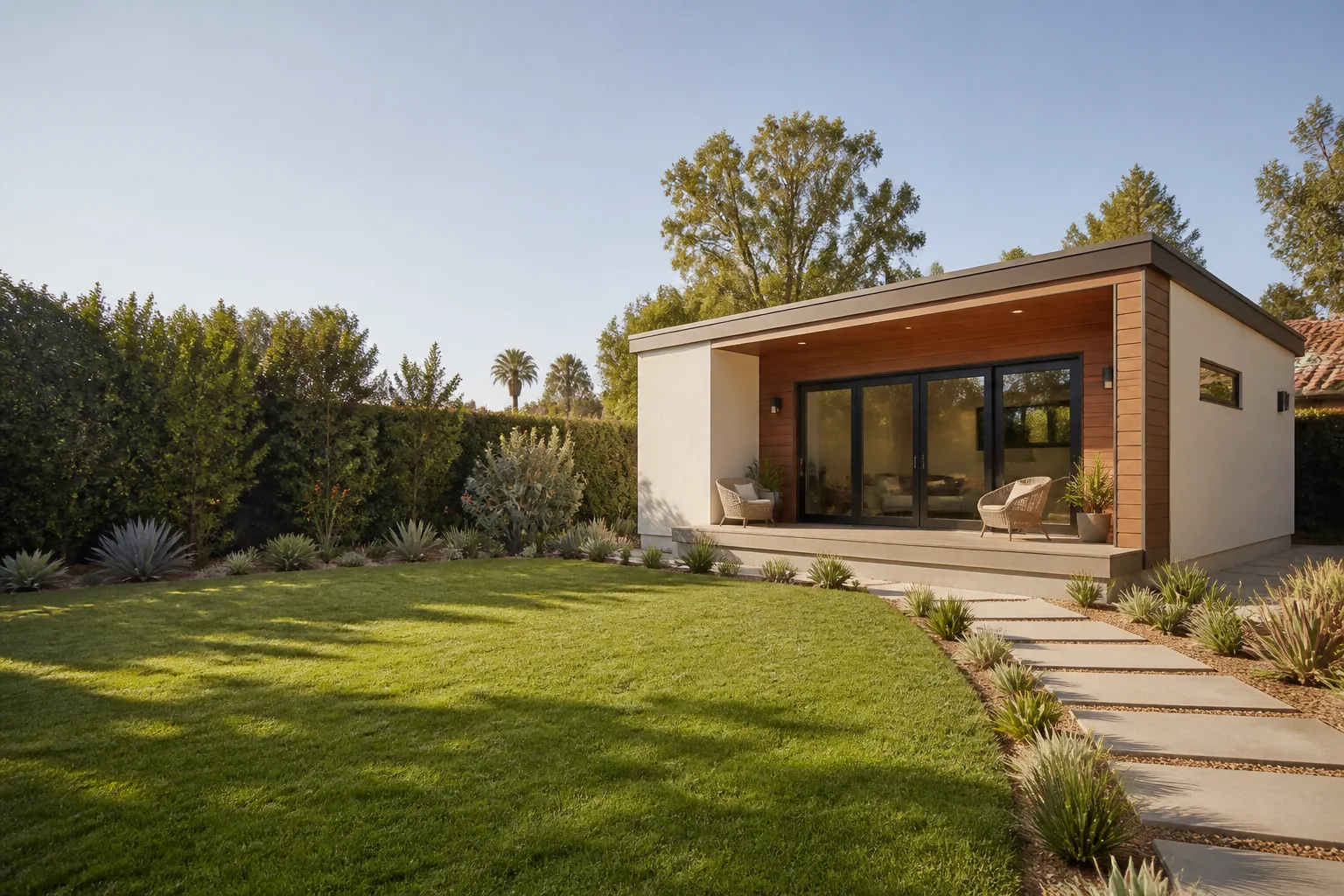
An ADU, or accessory dwelling unit, is a second home on the same lot as your primary house. It has its own entrance, its own kitchen, its own bathroom, and its own address designation. It can be attached to your main home (a garage conversion or an upper-floor suite), detached in the backyard, or built above a new or existing garage. In San Antonio, the city refers to them in the Unified Development Code as “accessory dwellings,” and since 2023, they are permitted by right on nearly every single-family zoned lot.
What separates an ADU from a guest room or a pool house is independence. A pool house with a bathroom is not an ADU. A converted garage with a hot plate is not an ADU. The city requires a full kitchen, meaning a permanent cooking appliance, a sink, and food-prep counter space. Once that threshold is met, you have a rentable home, a house for aging parents, or a return-to-the-nest setup for adult kids.
We build ADUs and home additions across the San Antonio metro, and the pattern we see is consistent: most homeowners first contact us confused about what’s legal on their lot, then surprised that the zoning obstacle they feared no longer exists. The 2023 update removed the conditional-use requirement that used to make ADUs a months-long zoning fight. That is the single biggest change to know, and it changed the math for tens of thousands of properties.
For a deeper look at how we approach ADU projects, see our ADU Builders in San Antonio page.
What San Antonio’s 2023 UDC Changes Actually Mean for Your Lot
The 2023 amendments to San Antonio’s Unified Development Code did three things that matter in the real world. First, they made ADUs a permitted use on lots zoned for single-family residential use, which means no more discretionary approval hearings for most projects. Second, they set clear numeric standards. Third, they struck down the old owner-occupancy requirement, which means you can rent out both your primary home and your ADU without living in either one.
Here are the numbers in plain English:
- Maximum size: An ADU in San Antonio can be up to 1,100 square feet, or 50% of the primary home’s conditioned floor area, whichever is less. If your primary home is 1,600 square feet, your cap is 800 square feet. If your primary home is 2,400 square feet, your cap is 1,100 square feet.
- Setbacks: A detached ADU must sit at least 5 feet from side and rear property lines. Attached ADUs follow the setbacks of the primary structure. In older neighborhoods like Beacon Hill or Jefferson with smaller lots, this is often the binding constraint, not the size cap.
- Height: Detached ADUs are capped at 25 feet, or two stories, matching the primary home’s height limit in most single-family zones.
- Lot coverage: Your combined building footprint, including the ADU, cannot exceed the maximum lot coverage for your zoning district. In many San Antonio residential zones, that number is 35% to 40%. So a 6,000-square-foot lot with a 1,400-square-foot primary home already sits at 23%, leaving room for an 800-square-foot ADU before hitting the 35% ceiling.
- Parking: San Antonio does not require additional off-street parking for an ADU, which is a meaningful break for older neighborhoods with alley access and no driveway space to spare.
- Utilities: The city allows ADUs to connect to the primary home’s water and sewer service, or to be separately metered. Separate metering matters for rental scenarios, and it adds roughly $3,500 to $8,000 in SAWS and CPS Energy connection costs depending on trenching distance.
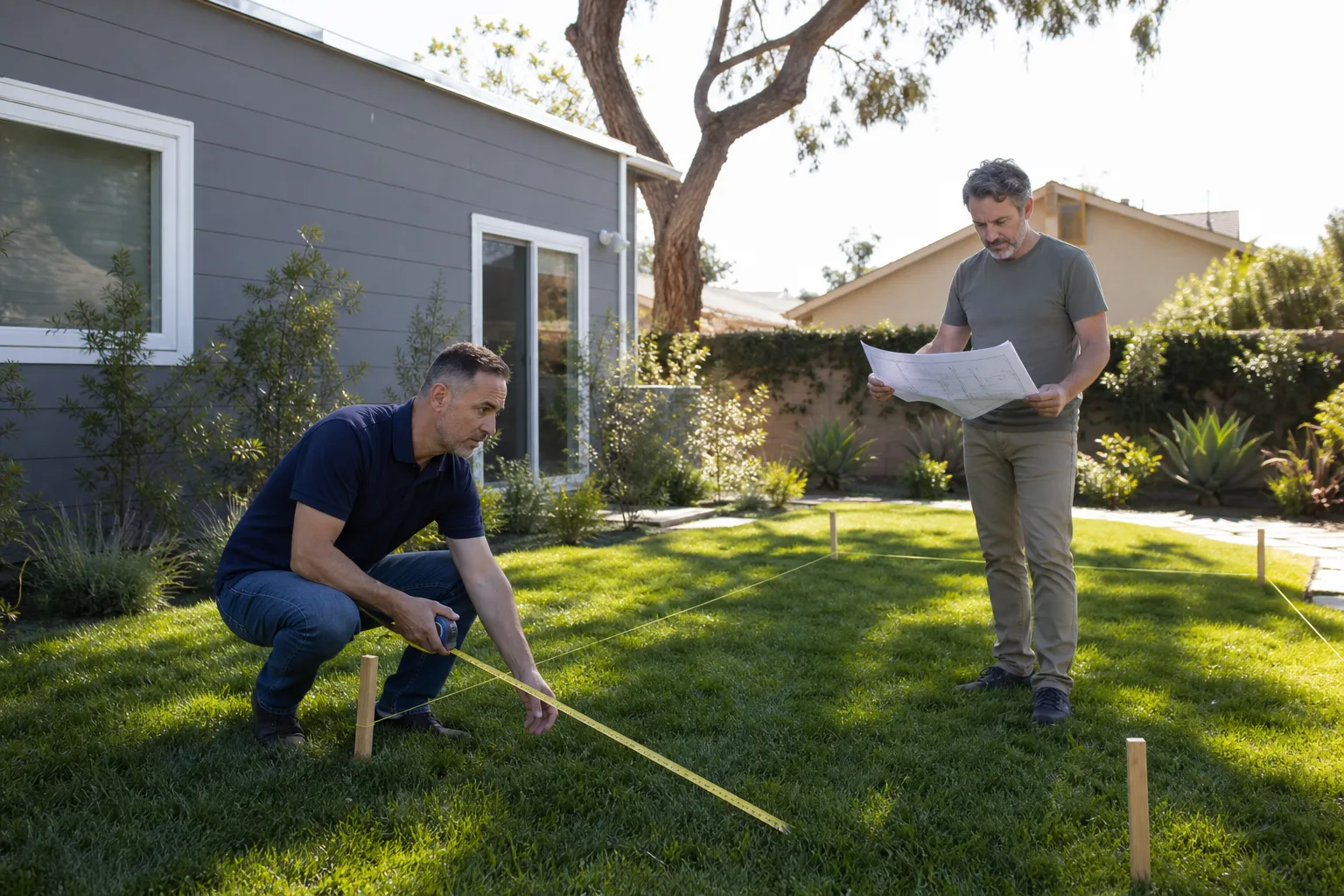
“Setback” is the trade term for the minimum distance between a structure and your property line, and “lot coverage” is the percentage of your lot that any roof covers. Both get thrown around in ADU conversations, and both are usually quoted wrong in online forums. Pull your actual zoning verification letter from the city’s Development Services department before you plan a single square foot. It costs around $70 and settles arguments before they start.
We’ve walked hundreds of San Antonio homeowners through this exact math. Some lots in Terrell Hills or Alamo Heights have more restrictive local ordinances layered on top of the city code, while lots in the newer far-west and far-northeast subdivisions often exceed the city’s minimum lot size and clear the lot-coverage test easily. Every lot has a number. Get yours before you shop builders.
How Much Does an ADU Cost in San Antonio?
Here is the direct answer, which most websites dance around: a site-built detached ADU in San Antonio runs $180,000 to $320,000 for a one-bedroom or two-bedroom unit between 500 and 1,000 square feet. That’s $220 to $340 per square foot, which reflects Bexar County’s 2025 labor rates, concrete costs, and the sales tax on materials that builders pass through. A garage conversion lands lower, typically $120,000 to $190,000, because the envelope already exists.
Prefab ADUs from brands that ship to Texas show a different profile: $160,000 to $280,000 all-in, with factory construction happening in four to six weeks and on-site assembly in two to eight weeks. The tradeoff is a more standardized floor plan and a brand-defined finish palette. For homeowners who value speed and price certainty, that tradeoff is usually worth it.
Here is the line-item breakdown we share with every prospective client in San Antonio, so you can see where the money goes:
| Cost Category | Garage Conversion | Site-Built Detached | Prefab Detached |
|---|---|---|---|
| Design & engineering | $6,000 – $12,000 | $15,000 – $30,000 | $8,000 – $18,000 |
| Permits & city fees | $3,000 – $6,000 | $6,000 – $12,000 | $5,000 – $10,000 |
| Utility connections (SAWS/CPS) | $2,000 – $5,000 | $4,000 – $9,000 | $4,000 – $9,000 |
| Foundation | Usually existing | $12,000 – $22,000 | $8,000 – $15,000 |
| Construction / assembly | $60,000 – $110,000 | $110,000 – $200,000 | $110,000 – $190,000 |
| Finishes (flooring, tile, cabinets) | $25,000 – $40,000 | $30,000 – $50,000 | Included in unit price |
| Landscaping & site work | $2,000 – $5,000 | $8,000 – $15,000 | $6,000 – $12,000 |
| Typical total range | $120,000 – $190,000 | $180,000 – $320,000 | $160,000 – $280,000 |
Two San Antonio-specific line items catch people off guard. The first is SAWS impact fees, which apply to any new dwelling unit and vary by drainage basin. The second is the tree-ordinance review, which triggers on lots with protected oaks (live oaks and Spanish oaks above a certain caliper). If you have a mature live oak in the way, your site plan changes, not your budget. Expect $2,000 to $7,000 for a tree-preservation plan and root-zone fencing.
Every price above is a range, not a quote. A real quote requires a site visit. But ranges are exactly what you need to decide whether you’re serious, and any builder who won’t give you a written range before asking for a deposit is not one you want working in your backyard. For help vetting candidates, see our How to Hire a ADU Contractor in San Antonio: A Step-by-Step Guide. Our standard practice is a written line-item price before any work begins, which is the only way a homeowner can meaningfully compare bids.
Prefab vs. Stick-Built in San Antonio: A Real Comparison
Most ADU guides present this as a philosophical choice. It isn’t. It’s a timing and money question, and the answer changes depending on where in San Antonio you live, what your foundation situation is, and how much you care about a custom floor plan. Our DIY vs Professional ADU: The San Antonio Homeowner’s Decision Guide breaks down which path fits your situation.
Stick-built means a crew builds the ADU on your lot, piece by piece, using traditional framing, roofing, electrical, and plumbing trades. It is fully customizable. You can match your primary home’s exterior with brick or limestone, angle the roofline for shade, and adjust window placement for privacy. It takes longer (10 to 16 months in Bexar County) and costs more per square foot, but you get exactly what you want. For a 900-square-foot two-bedroom ADU on an awkward lot in Monte Vista, where a crane can’t reach and the tree canopy dictates the footprint, stick-built is often the only workable option.
Prefab means the home is constructed in a factory, shipped to your lot in modules or panels, and assembled by a crew. The time advantage is dramatic: factory construction and site work run in parallel, so a project that takes 14 months stick-built can finish in 6 to 8 months prefab. Finishes are factory-specified, which means less decision fatigue and more price certainty. The limitation is crane access and module size. If your lot has no street access for a flatbed and crane, or if you’re in a historic district with restrictive delivery hours, prefab logistics can eat into the savings.
In our experience across San Antonio, the deciding factors come down to three questions:
- Do you have crane access? If a 40-foot flatbed can reach your lot and a crane can swing modules over your house or fence, prefab is on the table. If you’re on a flag lot or a narrow alley, it may not be.
- Do you want a custom floor plan? If the answer is yes, stick-built. If you’re happy to choose from a brand’s catalog, prefab.
- What is your real deadline? If you’re renting to a family member arriving in six months, prefab wins. If you’re building a forever addition and timing is flexible, stick-built gives you maximum control.
One point we hammer with every client: prefab does not mean no permits. Some San Antonio homeowners assume a factory-built unit bypasses city review. It does not. You still need a building permit, a site plan, SAWS and CPS sign-offs, and the same foundation engineering as a stick-built ADU. What prefab shortens is construction time, not the paper chase.
If you’re weighing a larger scope as well, see our Home Addition Contractor in San Antonio page for how these decisions change at higher square footage.
Which Prefab Brands Actually Ship to San Antonio?
This is the question no generic ADU guide answers, and it’s the one San Antonio homeowners ask us most. The answer changes based on factory capacity, regional shipping lanes, and whether a brand has Texas install partners. As of the current season, here is the real picture for the brands we build with:
- Abodu ships to San Antonio and has completed installations in the metro. Units arrive as fully finished modules, and the company handles permitting support through its internal team. Expect a 399-square-foot studio to 750-square-foot two-bedroom range, with all-in pricing in the $230,000 to $280,000 bracket before site work.
- Plant Prefab delivers to Texas and has an install capacity for San Antonio lots with standard crane access. Their panelized system builds walls, floors, and roof sections in the factory and assembles on site, which gives more design flexibility than full-module brands while keeping build time compressed. Landed pricing ranges from $190,000 to $270,000 depending on finishes.
- Dvele and Boxabl have an evolving Texas footprint. Boxabl’s Casa units are extremely compact (typically 400 square feet or less) and anchor well for a rental studio, while Dvele’s units trend larger and more bespoke, with pricing that lands at the top of the prefab range or beyond. Availability shifts quarterly, so we always verify a given brand’s San Antonio build queue before presenting options.
- Tuff Shed does not build ADUs. It builds storage structures and a small line of finished hobby rooms, but it does not produce habitable dwelling units with kitchens and full plumbing, and the city will not permit a Tuff Shed as an ADU. We mention this because it’s one of the most common search queries we see.
The material side matters too. James Hardie fiber cement cladding is a frequent spec on San Antonio ADUs because it stands up to Gulf humidity and the freeze-thaw cycles that crack stucco over time, and it carries a 30-year transferable warranty. For ongoing protection, check our Seasonal ADU Care for San Antonio: Year-Round Homeowner’s Guide. Where a stick-built ADU uses masonry, Hardie plank or panel is often the practical choice for a detached unit that needs to tie into the primary home’s look without a full masonry crew.
Our role as an ADU builder is to curate. We carry access to the brands above and present the ones that fit your lot geometry, your budget, and your deadline. We don’t push a single product line, because no single product line fits every San Antonio lot.
What You Can Realistically Rent an ADU For in San Antonio
Before you build, know the rent. A $200,000 ADU that rents for $1,200 a month is a very different investment than one that rents for $1,700. San Antonio rental rates split sharply by geography, and the same 600-square-foot one-bedroom unit will command wildly different numbers in different ZIP codes.
Based on current Zillow and Rentometer data for the metro, here are realistic monthly ranges for a one-bedroom ADU, roughly 500 to 700 square feet, with its own entrance and a full kitchen:
- Stone Oak / far north (78258, 78259): $1,350 to $1,700. Strong corporate rental demand, newer housing stock, families and traveling medical professionals near Methodist Stone Oak and Christus.
- Southtown / King William / Lavaca (78204, 78210): $1,200 to $1,550. Walkable, high short-term and mid-term rental appeal, but check HOA rules before listing on Airbnb. City short-term rental ordinances apply and are enforced.
- Far Northeast / Live Oak / Selma (78233, 78154): $1,050 to $1,350. Large rental pool near Randolph AFB and the Forum shopping corridor, with steady demand from military relocations.
- Medical Center (78229, 78240): $1,100 to $1,450. Consistent demand from medical residents and traveling nurses; proximity to the medical center is the driver.
- West Side / Edgewood (78227, 78237): $900 to $1,150. Lower entry price for the ADU itself, but rent ceilings are accordingly lower; cash flow still works if build costs stay under $160,000.
Two-bedroom ADUs add $250 to $400 to these ranges, but they also add 200 to 300 square feet and $40,000 to $70,000 to the build. In most San Antonio neighborhoods, the one-bedroom is the better rent-to-cost ratio, and the one-bedroom with a separate entrance and its own laundry gets the lowest vacancy.
One caution from our work in San Antonio: short-term rentals are not a zoning-guaranteed revenue stream. The city requires a permit for STRs, caps density in some areas, and HOAs can override with their own rules. Treat the ADU as a long-term rental investment first. If the STR option adds upside in your specific neighborhood, that’s a bonus, not a business plan.
The Written-Contract Checklist Every San Antonio Homeowner Should Demand
Most ADU horror stories in San Antonio are not about bad workmanship. They’re about bad paper. A verbal estimate, a handshake, and a “we’ll figure it out as we go” attitude turn a $200,000 ADU into a 14-month argument. Here is the checklist we hand every prospective client before they sign with any builder, including us:
- A fixed, written price before work starts. Not a range. Not an estimate with a 20% contingency clause. A line-item price that covers design, permits, utilities, construction, and the finishes specified. The only legitimate change-order trigger is a site condition that no one could have known about before excavation, and even that gets documented in writing.
- A written schedule. Milestones: permit submission, foundation pour, framing, rough-in, drywall, finishes, final inspection. If a builder won’t put dates on paper, they’re telling you they don’t control their own schedule.
- A written warranty with a clear term. Ask for one year minimum on workmanship. More if offered. Get it on the contract, signed and dated, with a specific process for how claims are made and resolved.
- Proof of insurance and licensing. In Texas, contractors are not licensed at the state level, which makes insurance verification more important, not less. Ask for a certificate of insurance naming you as additional insured, and verify general liability coverage before any work begins.
- A permit guarantee. The builder pulls the permits, schedules inspections, and passes final. If a builder suggests skipping permits to “save you money,” walk away. Unpermitted ADUs in San Antonio are discovered at sale, at appraisal, or at an insurance claim, and they cost multiples of the permit fee to unwind.
- A written change-order process. Changes happen. New fixtures, a different countertop, an added window. Each one must be documented with a price and a schedule impact, signed by both parties, before the work proceeds.
- A final inspection walkthrough clause. You walk the finished unit with the builder, note deficiencies on a punch list, and the builder fixes them before you release the final payment. If this clause isn’t in the contract, the leverage flips the moment you pay.
This list is not adversarial. It’s what professional builders do anyway. A builder who has real control of their process will hand you everything on this list without being asked. A builder who doesn’t have real control will resist it, and that resistance is your early warning.
For more detail on working with our team and what our process includes, see our Benson ADU San Antonio home page.
How San Antonio Homeowners Pay for an ADU
Four financing paths dominate ADU projects in San Antonio, and each has a different set of tradeoffs:
- HELOC or home equity loan: The most common route for San Antonio homeowners with meaningful equity. Rates track the prime rate plus a margin, and interest is often tax-deductible if the funds improve the home. The catch is appraised value; if you bought in the last three years, your equity position may be thinner than you think.
- Cash-out refinance: Works if your current mortgage rate is higher than today’s refinance rate, which is less common in the current rate environment. Runs your entire loan through underwriting again, but frees the largest single amount at the lowest rate.
- Construction-to-permanent loan: A single loan that funds the build and converts to a standard mortgage when the ADU is complete. These are available from regional banks and credit unions in the Bexar County market, including several credit unions with strong San Antonio presences. The underwriting process is heavier, but the loan amount is based on the projected post-build value, which helps if your existing equity is limited.
- Cash: The simplest and the rarest. If you have cash, the savings on loan origination, appraisal, and closing costs is typically $8,000 to $15,000, which is real money that stays in your budget.
A note on appraisals, because it drives financing more than most homeowners realize: San Antonio appraisers are still developing comps for ADUs. A 600-square-foot unit in a neighborhood with no prior ADU sales may appraise inconsistently. The more finished, documented, and permit-clean your project is, the better your appraisal. Keep every permit, every inspection report, and every invoice. They become your appraisal file, and they’re worth tens of thousands at refinance or sale.
Common Mistakes to Avoid
- Planning without a zoning verification letter. Reddit advice and neighborhood Facebook groups are not zoning documents. A $70 letter from the city tells you your setbacks, lot coverage, and overlay restrictions in black and white.
- Choosing a floor plan before checking crane access. In older San Antonio neighborhoods with mature trees and narrow alleys, the prefab unit you fell in love with online may be logistically impossible to deliver. Check access before you commit emotionally to a product.
- Ignoring SAWS capacity fees. They are not negotiable, they vary by drainage basin, and they are often excluded from the first “too good to be true” bid. Ask for every SAWS and CPS line item up front.
- Skimping on the foundation. San Antonio’s expansive clay soils move, and a poorly engineered slab on a detached ADU shows cracks in less than two years. Get a structural engineer, not a rule of thumb.
- Buying on sticker price alone. A prefab quote that doesn’t include crane rental, site prep, utilities, and finish trim is not a real quote. A stick-built quote that says “finishes TBD” is not a real quote. Compare line items, not numbers.
- Skipping the written warranty. In Texas without state contractor licensing, the warranty is your only real enforcement mechanism. A verbal promise is not a warranty.
- Rushing to list on Airbnb before checking city and HOA rules. San Antonio’s short-term rental ordinance has teeth, and some HOAs fine daily. Verify before you furnish.
When to Call a Professional
Any structural change to your property in San Antonio, from a garage conversion to a detached ADU, falls under the city’s building permit requirement, which means plans, inspections, and sign-offs from SAWS and CPS Energy. When the project involves foundation work, electrical panels, or new plumbing connections, the stakes rise further. A licensed electrician and plumber are non-negotiable for panel upgrades and sewer taps, and the coordination among trades is where a general contractor earns the fee.
Call a professional for a site assessment when you’re serious about the numbers. You’ll need exact measurements, a zoning check, a soil look, and a realistic budget. Benson ADU San Antonio offers free estimates in San Antonio. Call (430) 258-2928 and we’ll walk your lot with you.
Frequently Asked Questions
Site-built ADUs in San Antonio take 10 to 16 months from permit submission to final inspection, and prefab ADUs take 4 to 9 months, depending on brand, permitting speed, and site conditions. The largest variable is the city’s plan-review queue, which fluctuates from four weeks to twelve weeks, and the largest site-level variable is utility connection scheduling with SAWS and CPS. Call (430) 258-2928 to talk through a realistic timeline for your specific lot.
Yes. Every ADU in San Antonio requires a building permit, a site plan, and inspections at foundation, framing, electrical, plumbing, and final stages. Skipping permits saves money in the short term and creates an uninsurable, unsellable problem in the long term.
Yes, San Antonio’s 2023 UDC changes removed the owner-occupancy requirement, so you can rent out your primary home, your ADU, or both. Long-term rentals are straightforward; short-term rental listings require a city permit and may be limited by your HOA. Rental rates for one-bedroom ADUs currently span $900 to $1,700 per month depending on neighborhood.
The maximum ADU size is the lesser of 1,100 square feet or 50% of your primary home’s conditioned floor area, and your combined lot coverage including the ADU must stay within your zoning district’s limit. A 2,000-square-foot primary home caps your ADU at 1,000 square feet, while a 1,400-square-foot primary home caps it at 700 square feet. Exact numbers come from your zoning verification letter.
Typically yes, landed costs for prefab ADUs run $160,000 to $280,000, compared with $180,000 to $320,000 for site-built units of comparable size, with the biggest savings coming from compressed construction time and less jobsite waste. But prefab requires crane access and a standard lot configuration, so the savings are not automatic for every San Antonio property.
Yes, garage conversions are one of the most cost-effective ADU paths in San Antonio, typically running $120,000 to $190,000 because the structure already exists. The key requirements are a full kitchen, a separate entrance, and bringing the existing structure up to current energy code, which often means new insulation, drywall, and electrical. Call (430) 258-2928 for a written quote on your specific garage.
The Bottom Line
San Antonio is one of the most ADU-friendly major cities in the country right now, with permissive zoning, no owner-occupancy requirement, no parking mandate, and a rental market that supports the investment in nearly every neighborhood tier. The hurdle is not the city. It’s the build process: understanding your lot’s numbers, choosing between prefab and stick-built with real data, selecting a brand that actually ships to Bexar County, and getting a written price before you commit. Do that homework, and the rest is execution. If you want a builder who puts the plan and the price in writing from the first conversation, call us at (430) 258-2928 for a free estimate. For a broader look at our work, see our Room Addition Contractor in San Antonio page.
Written by Troy Eastman, Owner at Benson ADU San Antonio, serving San Antonio since 2006.